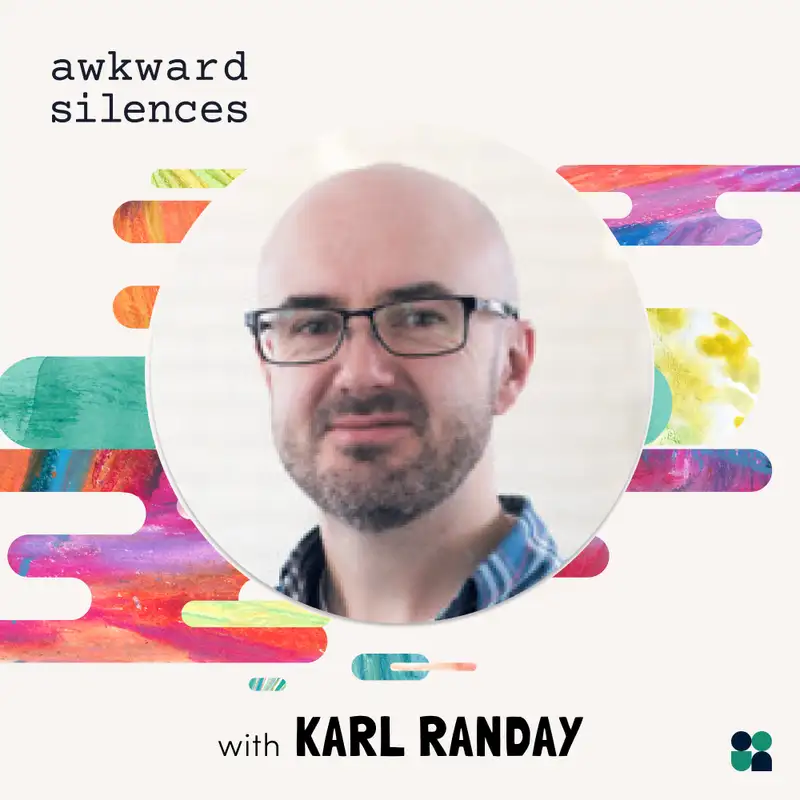
#181 - Why We Need Design Now More Than Ever with Karl Randay of 383
Erin May [0:00:02]: Hey.
Erin May [0:00:02]: This is Erin May,
Carol Guest [0:00:04]: and this is Carol Guest.
Erin May [0:00:05]: And this is Awkward.
Erin May [0:00:06]: Silences.
Erin May [0:00:08]: Awkward Silences.
Erin May [0:00:10]: This is brought to you by User Interviews.
Erin May [0:00:12]: The this way to recruit targeted high quality participants for any kind of research.
Ben [0:00:23]: Hey, It's Ben welcome to Awkward Silences on today's episode, we have Karl Rand, who is currently the experience director at 383 group.
Ben [0:00:30]: Karl got stops at canvas where he was the head of design.
Ben [0:00:34]: He's also a design mentor at design dot org.
Ben [0:00:37]: He's someone who has worked with a bunch of different companies on a bunch of different design opportunities, not problems, opportunities.
Ben [0:00:44]: And so he's a perfect guest first us to talk about kind of the state of design today.
Ben [0:00:48]: We talk about a whole bunch of things in this conversation.
Ben [0:00:51]: We're gonna talk about design templates.
Ben [0:00:52]: We're gonna talk about Ai and we're gonna talk about the vacation of design and how you importantly can make the case for design for today's business.
Ben [0:01:01]: And so the skills and the mindset that you should be putting to work so that your company, your stakeholders, Whoever it is that you work with are thinking about design in a way where you can still keep your craft, keep that rigor that made you fall love with the discipline and also keeps you in demand with whoever it is that you need to help.
Ben [0:01:20]: So here is Karl Randay, of 383 group.
Ben [0:01:23]: Enjoy.
Ben [0:01:23]: Karl Randy.
Ben [0:01:30]: Welcome to Awkward Silences.
Karl [0:01:31]: Epic.
Karl [0:01:31]: Thank you for having me.
Ben [0:01:33]: I'm so happy to get into this discussion so many of our conversations lately have been focused on research insights, and we're gonna get to some of that.
Ben [0:01:41]: You, I am excited to talk about for many things.
Ben [0:01:44]: But one of them is that you are first and foremost, a, I guess we're gonna get a little bit about your background and how you started in social sciences, but you're a design thinker and a designer and a design leader.
Ben [0:01:53]: So I'm hoping that we are gonna unpack how the various mach combinations and changes in the world look and take effect from your Po in the design and design consultancy space.
Ben [0:02:04]: So let's first start with what is 383.
Ben [0:02:06]: What do you and your team typically do when you work with clients?
Karl [0:02:11]: We are a digital innovation consultancy say.
Karl [0:02:13]: But, like, I mean, three for years he's been around for twenty odd years now, and I've I've been here about twelve.
Karl [0:02:18]: And originally the business was set up just as a better way of doing design.
Karl [0:02:22]: Back in the day, there were a thousand to one of these types of businesses, people were getting started in the bedroom if they had a copy of a adobe suite or whatever.
Karl [0:02:30]: And three three came about by way of learning a lot of things from businesses that haven't done it very well and how we can try and solve the problems our clients for facing rather than just getting fixated on picking the cotton shade in a particular form.
Karl [0:02:44]: So it's evolved today to be mostly centered around us Going into, like, relatively legacy organizations like large businesses, we work with companies like Hilton and and Jaguar, and Del, thinking about the way that they typically can't do certain things or don't have the in house expertise, So what we tend to do is we've got a small unit of people who range from strategy to design product.
Karl [0:03:08]: We par in like, a sku quirk team.
Karl [0:03:11]: We protect the business so we can carry on as usual unlike we we proud we experiment really value proposition stuff.
Karl [0:03:20]: We do research.
Karl [0:03:21]: We build prototypes, prove that they work.
Karl [0:03:24]: Prove that they day work and then we hand you over to a business and para out again at the end of the day, but, know, sometimes our engagements for really long ones.
Karl [0:03:32]: Sometimes they're really really short, but it's incredibly varied and multi sector so it keeps us going.
Ben [0:03:38]: That's really helpful.
Ben [0:03:38]: Have you found that they are...
Ben [0:03:40]: I mean, is I'm gonna use the word Ai to just span automation, large language models workflow, like Saas software, all the stuff that any company certainly a company that might have been around for a minute or two cease says, hey, We need to do something about that.
Ben [0:03:55]: Do they often come in?
Ben [0:03:56]: And, again, I don't wanna speak earlier client, But do they have a sense of what they need?
Ben [0:03:59]: Or do they knock on the door and say, hey, we know we need help.
Ben [0:04:01]: We don't exactly know how or where to start?
Ben [0:04:05]: What's your first foray?
Ben [0:04:06]: Like, that first conversation with a client.
Ben [0:04:08]: Do they often know what they need or what do you and your team do to figure that out?
Karl [0:04:11]: Sometimes, there's what I call a scale of certainty where you'll get a client who come along and they just haven't got a clue at all, and they're literally just fearing the eyes, dow, concern come and help us figure out what this thing is.
Karl [0:04:24]: Sometimes they'll come along and but have a really really strong value idea everybody want.
Karl [0:04:28]: And they won't be displayed from that, and you just have to kind of go along and understand how you can adapt on the fly and validate as you go.
Karl [0:04:35]: Sometimes they'll come along and what they do want is potentially disruptive, so we have to help validate that and educate what that might look like And certainly, Ai and tech features heavily, especially the name of the last six months.
Karl [0:04:48]: Give out of workshops where we've just met myself and the business founder and we've spent hours an hours hours which just talking about what you do right now?
Karl [0:04:54]: How can we help you get started in understanding where Ai sits in your business, Also how can it be helpful?
Karl [0:05:00]: And a lot of that is it's not this.
Karl [0:05:03]: It's that.
Karl [0:05:03]: And, you know, people who don't really work with yay, Ai day to day can kind form, a really weird misconception of what it does, what it doesn't do.
Karl [0:05:14]: How it's gonna, you know, still be job in all that.
Karl [0:05:17]: Yeah.
Ben [0:05:18]: Yeah.
Ben [0:05:18]: I was scanning at three Three portfolio in among many other companies.
Ben [0:05:21]: There's some spirits brands, and I'm thinking about...
Ben [0:05:23]: Like, I don't know if actually any of the companies do this, but, like, chatbot bots are often or automated agents are often one way that a company feels they can easily deploy Ai.
Ben [0:05:31]: And I'm thinking some of the brands with whom you work.
Ben [0:05:34]: They have a very large and diverse range of products, You know, I might be as a as a spirit drinker, you know, use an Ai agent you know, like, hey, I wanna have this sort of a feeling or this sort of a taste.
Ben [0:05:45]: I mentioned that because there's a design component, and there's an interaction component and there's a, you know, there's there's all the things that you and your team specialize in.
Ben [0:05:52]: Do you hear from brands that they recognize that their design needs to be they know that their design, I assume needs to be multi model and omni channel.
Ben [0:06:00]: And what are the specific design problems or opportunities that they mentioned.
Ben [0:06:05]: There's certainly business ones that we can get to?
Ben [0:06:07]: They find probably new streams of revenue, but, you know, you're a design thing thinker.
Ben [0:06:10]: You're helping build a cohesive system around either visual story, walk us through with those sorts of questions Again, I know that they'll vary client to client, but walk us through the design opportunities that you're working with them.
Karl [0:06:22]: I guess, a lot of what we do because it is so broad when when he comes to design.
Karl [0:06:26]: It invariably finds that point of compliments around people.
Karl [0:06:30]: We've had a couple of interesting projects over the last ten years where there's been such a myriad of design challenges.
Karl [0:06:37]: So we don't have a system.
Karl [0:06:40]: We don't have a consistent way of doing things.
Karl [0:06:43]: We don't have a way of adopting or growing as a business.
Karl [0:06:47]: We don't understand what the future of our business looks like we don't know how to use Ai That invariably restart the people, not just outside the organization.
Karl [0:06:55]: Don't just think about the audience that consumer a product or a service.
Karl [0:06:58]: A lot of what we've ended up doing is thinking about people inside that business, who are trying to move it forward.
Karl [0:07:05]: That might be, for instance, if you work in healthcare care.
Karl [0:07:09]: One particular client.
Karl [0:07:10]: We had the fantastic opportunity to work with.
Karl [0:07:13]: We're trying to raise awareness of how they helped the Nhs.
Karl [0:07:16]: So for your American audience, Nhs is health you don't have to pay for?
Karl [0:07:19]: I mean it's completely broken, but we won't get into that.
Karl [0:07:22]: But in Ver, a lot of it was not just how people can consume and be aware of how those services work.
Karl [0:07:28]: It's also inside the business, you've got people in call centers who are on answering telephone to incredibly stressed out individuals who are trying to solve very real life or death problems, and being able to deal with those stressed out customer or patients.
Karl [0:07:45]: When you just got screens and screens of data in front of you Is a very real personal problem.
Karl [0:07:49]: So what we do first and foremost is stop and think about, well, what is your awareness of the challenge that you have as business?
Karl [0:07:55]: What do you think your customers are having a problem with and then we look at that from a ten thousand four view and trying to understand how we blend that stuff together.
Karl [0:08:03]: And this kind of like where research has been really important fu of the way that we work over the years in that.
Karl [0:08:09]: We're desperate to get businesses to our solutions that we can test.
Karl [0:08:13]: And we can validate, but built upon insight, or more often than not we've either get a client who doesn't appreciate any form of research at all, and they just wanna, you know, lick the things stick in me air.
Karl [0:08:24]: You just got a race towards what you think their target is.
Karl [0:08:26]: Yeah.
Karl [0:08:27]: Or they've had consult come in.
Karl [0:08:30]: We're talking on the big consultants and next spend hundreds of thousands of dollars on research.
Karl [0:08:36]: And at the end of that process, someone dropped a massive document on their desk and go good luck reading that.
Karl [0:08:41]: See like...
Karl [0:08:42]: Here we
Ben [0:08:43]: go I'll take my fee now.
Karl [0:08:45]: Yeah.
Karl [0:08:45]: And that business is like, I don't I have to read this.
Karl [0:08:47]: I don't know what we've got do first.
Karl [0:08:48]: Now we inherit a lot of those sorts of projects.
Karl [0:08:50]: So for us research, is very much about how do we talk to people and understand their challenges we'll also keeping one eye on.
Karl [0:08:56]: You know what.
Karl [0:08:57]: This is just a means to an end.
Karl [0:08:59]: The point of this research is for us to go right.
Karl [0:09:02]: Look at this maths, these are all the problems you've got, but because of that, this is where we think we need to focus first.
Karl [0:09:08]: And that tends to be the way that we operate when we hit the ground, we'll do that whole sort of therapist couch thing inside and outside the business, which is, I guess a lot of why my background has turned into psychology.
Karl [0:09:21]: And then he's today, which is about like validate stuff.
Karl [0:09:24]: So great.
Karl [0:09:25]: We hear what you think...
Karl [0:09:26]: Your challenges are.
Karl [0:09:27]: Let's go and make sure that the math stacks up before we spend all these money.
Karl [0:09:32]: We'll still figure out actually.
Karl [0:09:33]: Is that really thing?
Karl [0:09:34]: And some of that...
Karl [0:09:36]: I mean, like, we...
Karl [0:09:36]: Going specifics in in Bay about some of the projects we've had, but, you know, you hear about these problems and people have screaming and shouting up particular things.
Karl [0:09:44]: But when you look at the impact on their lives, and the relationship with a particular brand it has such a low effect, it's so very easy to be walked down the wrong avenue based upon How I volume?
Karl [0:09:57]: Oh, no.
Ben [0:09:59]: Yeah.
Ben [0:09:59]: And that's one of the many reasons I wanted to have you on because you are working with a myriad of clients who...
Ben [0:10:04]: As you alluded to have a different relationships with research and they have a different maturity around user experience and design thinking.
Ben [0:10:10]: So let's stick for a moment on those customers or those clients that you said are maybe a little lee or a little like they've been burned quote unquote by research before?
Ben [0:10:17]: Because a lot of our listeners have maybe a product or a design or an engineering stakeholder that sort of has a sense of what they wanna build or maybe they've already built it, and they're just coming to research took just tell me that my sense is right.
Ben [0:10:28]: So when you have a client walk through the door, and there may be a little hesitant or they're confused even about doing their research?
Ben [0:10:34]: It sounds like you've you work with them the client on, like, what are your long term goals?
Ben [0:10:38]: What do you want to achieve in ten, twenty, thirty years?
Ben [0:10:41]: And then your team, Pivot.
Ben [0:10:42]: It sounds like too.
Ben [0:10:43]: Okay.
Ben [0:10:43]: Well we need to go talk to your customers your clients.
Ben [0:10:45]: How do you make that case for a company that might be a little hesitant to.
Ben [0:10:49]: Like I don't actually think we need to do that.
Ben [0:10:51]: How do you make that case for them?
Karl [0:10:53]: That's a challenge, and it's a great one.
Karl [0:10:54]: I think for us, it comes from a myriad of proof So where we've done it before for other great brands.
Karl [0:11:01]: But the same time, the trust is critical.
Karl [0:11:03]: So when we build a relationship with a new client, and we we really want them to invest in a nominal amount of research.
Karl [0:11:12]: Whereas it's about making it an easy yes for them.
Karl [0:11:16]: So those first initial bits of work that we will do will be very relatively small and relatively low cost.
Karl [0:11:23]: But also require relatively low trust as well.
Karl [0:11:26]: So sometimes for instance, we'll spend twenty four to forty eight hours with a client in a workshop environment, face to face killing post notes, and we'll do that as an investment piece.
Karl [0:11:38]: Because we believe in the process and we believe in the way that we're gonna march that client towards understanding research and whites challenging maybe their standpoint, but we don't want them to feel like there's a barrier to that Right?
Karl [0:11:53]: So do you know what, we believe so much in this will give you this fray or we'll spend a week with you and we'll show you the evidence and show you where you could go what this potential look at things like the three horizons, for instance.
Karl [0:12:04]: And more often than not that does a great job of making them realize actually the next step isn't a big leap.
Karl [0:12:10]: It's just another small one.
Karl [0:12:11]: And just buy a lot of these mini milestone projects.
Karl [0:12:14]: We managed to get by in quite easily.
Karl [0:12:16]: And a lot of the time, you know, we find the challenges inside these sorts of businesses come from high end stakeholders, and the people who are trying to engage with this are people who drive specific teams, and they're trying to convert other people inside their own organization.
Karl [0:12:31]: So we might spend some time putting together a vision piece validating that vision piece so we can demonstrate what we think that future looks like and that how something might work.
Karl [0:12:42]: So we'll...
Karl [0:12:43]: It's an added fake it to make it.
Karl [0:12:45]: So we'll go out, do some filming, do some interface work.
Karl [0:12:48]: Can I spend a week in after effects mocking something up?
Karl [0:12:52]: So the executives and A say psychologist can really see.
Karl [0:12:55]: And They can visualize and they can imagine what these thing is we're trying to develop.
Karl [0:12:58]: So it makes it much easy to accept.
Karl [0:13:00]: What we're trying to do and what we're trying to achieve.
Ben [0:13:03]: That value of trust is...
Karl [0:13:04]: It's critical.
Ben [0:13:05]: My gosh.
Ben [0:13:05]: And so many of the principal researchers or senior leaders I talk to when they're...
Ben [0:13:10]: And I wanna ask this of you later when they are developing their or their frontline Ics.
Ben [0:13:15]: They always stress.
Ben [0:13:16]: You know, you have to be a salesperson.
Ben [0:13:18]: You have to persuade and you have to really build the relationships with your stakeholders.
Ben [0:13:21]: It's not the case anymore.
Ben [0:13:23]: I don't know if it ever was.
Ben [0:13:24]: That just sort of saying, I'm a researcher.
Ben [0:13:26]: Here did your research.
Ben [0:13:27]: Or I'm a designer, let's do some thinking.
Ben [0:13:29]: That's not gonna be that light bulb moment for folks.
Ben [0:13:31]: Some folks, some stakeholders might see that as, like, well, that's expense.
Ben [0:13:35]: I actually, I had a a researcher at a very big, big org say that research meant to their stakeholders slow, expensive and launch blocking.
Ben [0:13:42]: Like, all the things that research is not.
Ben [0:13:44]: Supposed to do I mean, if it's gonna uncover problems that might slow a launch that's what it needs to do.
Ben [0:13:50]: But I think it's so useful to hear you say that you take the clients through a workshop so that you're demonstrating your expertise.
Ben [0:13:57]: You're not just naval gazing, you're not just yourselves putting a finger in the ear.
Ben [0:14:00]: You're bringing that science like you said those math.
Ben [0:14:02]: The numbers you're bringing that.
Ben [0:14:04]: And I think you also mentioned something else that's really both important and quite challenging for us as researchers and design thinkers is that we often are are selling to or working with a stakeholder who then has to turn it around and sell it to and influence someone else.
Ben [0:14:16]: Do you you alluded to earlier that sometimes the old way of consulting or maybe some of the time now is still, like, drop a big report send you on your way.
Ben [0:14:24]: How do your team extend that tale?
Ben [0:14:27]: Do you put in, like, activation plans?
Ben [0:14:28]: Do you have roadmap to make sure that the people you're serving can then make the changes or the improvements in the...
Ben [0:14:34]: Yeah.
Karl [0:14:35]: Yeah.
Karl [0:14:35]: The big secret to a lot of this stuff is just collaboration involvement?
Karl [0:14:39]: So especially around those workshops, initial research, concept development, mapping out where we wanna go.
Karl [0:14:46]: It's a fifty fifty process.
Karl [0:14:48]: So we don't call our clients clients who call them true partners.
Karl [0:14:51]: Because...
Karl [0:14:52]: And again, this is a bit of psychological trickery.
Karl [0:14:55]: A lot of the stuff that works really well for us.
Karl [0:14:57]: Bit.
Karl [0:14:57]: I don't know.
Karl [0:14:57]: We've learned from watching, Fbi shows or whatever.
Karl [0:15:00]: The sort lot of police interrogation that kind of thing.
Ben [0:15:03]: I wanna be on your on your lunch and learns or your training sessions.
Karl [0:15:06]: I can remember back in the day when I worked for classic weather the design company back in the the early two thousands when you would...
Karl [0:15:13]: You do three versions of the design, they take it home, they show their other halves, and then they just be this public opinion of watched you change what should be changed.
Karl [0:15:23]: The quickest way of defeating that.
Karl [0:15:25]: He's the quickest way of making everything else work that you just mentioned as well.
Karl [0:15:28]: So getting internal buy in, helping internal teams know how to carry these things forwards.
Karl [0:15:33]: He's making sure that a parts of absolutely everything.
Karl [0:15:36]: So those workshops is very much about ensuring that they're contributing to these things and collaborating with it.
Karl [0:15:43]: So when we do research when we interview people, they're all Okay.
Karl [0:15:46]: When we're s emphasizing those findings and all the stuff that we're hearing from people, they're helping push it because more often than not, if a client is or they feel like they're contributing to a thing and they're helping craft whatever it is you're making, they're less likely to tear down to be honest.
Erin May [0:16:04]: Awkward interruption, This episode of Awkward Silences like every episode of Awkward Silences is brought to you by User Interviews.
Carol Guest [0:16:11]: We know that finding participants for research is hard.
Carol Guest [0:16:13]: User Interviews is the fastest way to recruit targeted high quality participants for any kind of research.
Carol Guest [0:16:19]: We're not a testing platform.
Carol Guest [0:16:20]: Instead, we're fully focused on making sure you can get just in time insights for your product development, business strategy, marketing and more.
Erin May [0:16:29]: Go to User Interviews dot com slash awkward to get your first three participants free.
Ben [0:16:35]: Oh, I bet.
Ben [0:16:36]: I bet.
Ben [0:16:36]: They've got their investment.
Ben [0:16:37]: They're seeing it.
Ben [0:16:38]: Yeah.
Ben [0:16:38]: They remember that person that they maybe were...
Ben [0:16:40]: They saw a focus group and interview or they...
Ben [0:16:42]: Yeah.
Karl [0:16:43]: But if you start from basics, Right, you know, if you end up from your first couple of engagements are trying to understand what those basic elements are the three horizons look like say so This is where we wanna be now next six months and and two years, and they're helping build those.
Karl [0:16:56]: You're gonna get to an ap g point where you can push that that out to water, and they're so con converse with the stuff that you've done and where you're going where they're going.
Karl [0:17:05]: That they can carry up momentum forwards inside the business or you're pivoting and looking at the next challenge.
Karl [0:17:10]: What a lot of what we've done over the years is we find ourselves was para to a business, and it's very much like onto the deck of a boat and the boats on fire.
Karl [0:17:18]: There are problems.
Karl [0:17:19]: There are there are some interesting clients that we've experienced over the years, especially the automotive industry that had d challenges.
Karl [0:17:26]: And we've gone to help them understand which of those fires to put out first.
Karl [0:17:30]: And then build a model around it and a strategy and a road map.
Karl [0:17:35]: Yeah.
Karl [0:17:35]: Sometimes it's physical digital things that we're making.
Karl [0:17:37]: Sometimes it's your service design, but it's all centered around, you think this thing is on fire and it's more on fire than the rest of this stuff.
Karl [0:17:45]: Let's just validate that in an order, and then we'll put all those five in the order.
Karl [0:17:50]: So we're helping those teams understand what the map is all the direction for something, We can leave them to that while we focus on fine number two.
Karl [0:17:58]: And more often than not, like a lot of what we do that works very well is that coaching system.
Karl [0:18:03]: Sometimes we're helping businesses hide their own design all their product teams.
Karl [0:18:06]: Sometimes we're just training them and helping them use tools in the way that were used to.
Karl [0:18:11]: Because we use just going in and hacking away.
Karl [0:18:14]: And that is the car of the way that we work, it's very hacking, but it's fast and it's effective.
Karl [0:18:18]: And if they can roll those methodologies and into whether they do stuff, then it means we can focus on some of those really big growth areas and makes significant difference.
Ben [0:18:28]: Yeah.
Ben [0:18:28]: And I wanna get to that scrappy, my word time sensitive because that's the thing that we hear from a lot of our listeners is that they wanna deploy their methods, but their stakeholders have given them half or one week just much less time than they would.
Ben [0:18:41]: But before we get there, Wanted to ask you, you said you've talked about the three horizons, are there other questions that you posed to stakeholders or clients or partners that really helps them get thinking?
Ben [0:18:51]: Like, what would you recommend for someone who's working with a a stakeholder who maybe not doesn't know what they don't know.
Ben [0:18:56]: What are some questions that you and your team have have you found successful to ask them to find those opportunities from the business problems for the business cases.
Karl [0:19:04]: So I think it is the sort lot of asking simple questions.
Karl [0:19:07]: And stupid questions as well to Ghana honest.
Karl [0:19:09]: I think when it comes to specific stakeholders, especially if you've got somebody inside a client's business, whom they might be the middle, there might be near the top whatever.
Karl [0:19:16]: And they've got their own agenda, their own growth opportunities a lot of what we wanna do is listening to that style kind of stakeholder and understand where they wanna go and what they wanna do with the business.
Karl [0:19:27]: And how them understand what they are of the compromise looks like.
Karl [0:19:30]: More often than not, it is just like that therapist couch job you're listening to why are we in the room with you?
Karl [0:19:37]: There's gotta be a reason you've hide us to come and listen to the challenges that you've got?
Karl [0:19:40]: But but, like, where is where is the whole business going?
Karl [0:19:44]: You know, know, where you trying to go overt?
Karl [0:19:46]: But then how does that then boil down So sometimes when we've been dealing with clients that have been silo teams, and each team has captain.
Karl [0:19:54]: So listening to each of those captains make and feel heard so that we can compare those agendas and see where they overlap, sometimes where they conflict fl, essentially becomes at our of mediation solution.
Karl [0:20:06]: And lot the time again.
Karl [0:20:07]: Those those compromises it is...
Karl [0:20:09]: That's where progress comes in, but it is...
Karl [0:20:10]: It's just listening to where does person number one wanna go?
Karl [0:20:14]: What do they wanna do?
Karl [0:20:15]: They might be new in the business.
Karl [0:20:16]: They might would a lot really great.
Karl [0:20:17]: What are the small things that we can do to help them achieve that or keeping one eye on actually, what does this this model growth, look like for this organization.
Karl [0:20:26]: We are a very small team, but we tend to spread our skills across a range of different methods.
Karl [0:20:31]: So, you know, while we are designers first, we look at things like bi small compass hurt like other kind of structural strategic methods so that we can juggle a lot of plates and spin a of balls just keys the mixed matter metaphors, but more often than not, yeah, it it's just listening, juggling, making sure that everybody's is happy to a degree, but that, you know, if you've got three people in front of you, and each one of them has conflicting agendas getting it out there.
Karl [0:21:00]: I'm my god.
Ben [0:21:02]: I think you have an office and some of your team goes and meets in person.
Ben [0:21:05]: And...
Ben [0:21:06]: But for those who are hybrid or maybe fully remote.
Ben [0:21:08]: I'm...
Ben [0:21:08]: Maybe it's a giant digital whiteboard or it's a huge doc with a bunch of hits misses and wishes from each captain, you and your team come back after doing these workshops.
Ben [0:21:17]: You're looking at maybe dozens, maybe upwards of a hundred or so opportunities.
Ben [0:21:21]: How do you prioritize?
Ben [0:21:22]: Walk us through that process because of then I wanna know how you...
Ben [0:21:26]: That prioritization leads into the scrappy process that you found that helps you sort of learn on the fly and then do you react and sort of change.
Ben [0:21:34]: So let's start with that prioritization process.
Ben [0:21:35]: What does that look like with you and your team?
Ben [0:21:37]: Because you said it's small.
Ben [0:21:38]: Typically, how many folks do you have working with you on one of these engagements?
Karl [0:21:41]: We go and do the initial consultancy and the workshops that there's maybe, like three of us.
Karl [0:21:45]: And three three upgrades very much from a a strong core team.
Karl [0:21:49]: So as a other business, there are twenty plus call 383 as any one time.
Karl [0:21:54]: And because of the range of things that we're doing, it's a little bit hub and spoke.
Karl [0:21:57]: So we have a very strong network of people that were consistently leaning or upon in the contractor and freelance Universe, you've been with us for years.
Karl [0:22:06]: So we can dial up or dial down certain special So whenever we go to anyone whenever we go into anyone business or anyone's situation to run a workshop run a consultancy, inject designers or succumb people, he's very much like a game of Top trump's, you've got own sex let you play that game, So I've got a list of people in my team or in across the business.
Karl [0:22:29]: And we can understand based upon what their initial triage consultancy see that, myself and and the business owner will have run.
Karl [0:22:36]: What initial mean might not like.
Karl [0:22:38]: So here what the we wanna select.
Karl [0:22:39]: And how long we want that engagement to be.
Karl [0:22:42]: What we all then do, once we've listened or we've run through that first engagement and we know what the core objectives are.
Karl [0:22:49]: We'll often already have a very strong sense of what some of foundational requirements might be.
Karl [0:22:53]: So let's say, you know, sake of argument, and this comes in and they really need a strong single customer view.
Karl [0:22:59]: They've got really old crappy Crm.
Karl [0:23:01]: There's a lot like technical consultancy that money to come first making sure They onboard with something like Salesforce.
Karl [0:23:07]: And what does the strategy that leaves on top?
Karl [0:23:09]: So it's actually quite easy to figure out what the first few steps are.
Karl [0:23:13]: So defining horizon one and a little bit of horizon two.
Karl [0:23:16]: Actually quite simple.
Karl [0:23:17]: We don't also believe in, like, the classic idea of Mvp where you build something test it and throw in the bin for much more about being super proficient where we work with the clients map power what we think that future platform looks like.
Karl [0:23:31]: Can we doing it in such an agile fashion, and we just like a many layered cake just build vertically, but for it to be stable.
Karl [0:23:38]: These are the groundwork elements that we need to focus on.
Karl [0:23:43]: So for us, the prioritization comes down to spending time to understand effort versus impact.
Karl [0:23:48]: And this is the same for lot of businesses.
Karl [0:23:50]: What big things do we need to invest in now that will make it easier as time progresses to do certain stuff.
Karl [0:23:56]: Sometimes if it's customer focus, we need to understand what that looks like from an appetite point of view in terms of resolving some of those bigger friction that we've heard, and we've got a we've got a proprietary scientific method that we've invented called fresh mapping, which means we can go out a mathematically measure, what friction looks like for a customer.
Karl [0:24:15]: So, like if we know, for instance we're dealing with an automated client and they have a series a dealerships.
Karl [0:24:20]: If someone goes into that dealership, and they have, they experience a really bad problem, try to buy a car or or what have you?
Karl [0:24:28]: We can measure that or ease.
Karl [0:24:29]: They've also can compare it against everything else in the customer cycle.
Karl [0:24:33]: So we know some of those foundational things might be fixing that.
Karl [0:24:37]: Everything that's root it cause and that kind of thing really.
Karl [0:24:40]: It's really understanding across that journey, how you can track all those problems back to state number one.
Karl [0:24:46]: I see.
Ben [0:24:47]: Yeah.
Ben [0:24:47]: So there might be along a journey a red if we're using that as a color for a negative or a, yeah, negatively vale moment, but then there's a severity.
Ben [0:24:54]: Again, my words not yours.
Ben [0:24:56]: There's a severity and that might be from zero to five.
Ben [0:24:59]: And if you've got a couple of fours, you and your team might say, okay.
Ben [0:25:01]: That's where we really need to be because it's...
Ben [0:25:03]: Maybe if it's bad, but it's only an annoy, a one or two that might not rise to the level of tackling four or four or five.
Ben [0:25:09]: It sounds to me.
Ben [0:25:10]: And again, for the folks listening who are Ics, it sounds like your team wear a lot of hats.
Ben [0:25:14]: A designer on your team isn't just a designer?
Ben [0:25:17]: It sounds like they're doing mock ups they have to understand maybe some technical specifications of Crm.
Ben [0:25:22]: Are there skills that in the last three, four years you have found are really helping your own teammates be the designers of tomorrow.
Ben [0:25:31]: Because, like, I wanna talk a bit about your thoughts on design systems and how Ai and large language models are supporting or maybe doing some of the designer...
Ben [0:25:39]: Let's start with your team and the skills that your designers really use to help deploy this scrappy method because you don't wanna bump into a a person who's like, well, I only do this.
Ben [0:25:49]: I only do pant colors.
Ben [0:25:51]: I only do modeling.
Ben [0:25:52]: Like, you...
Ben [0:25:53]: That probably doesn't work on your team.
Ben [0:25:54]: So What are some of the skills that designers broadly define used and deploy and your team to be scrappy nimble and multi talented.
Karl [0:26:02]: So we start if like, if we're bringing something into 383, the core strength can me talk about shirts.
Karl [0:26:07]: Yeah.
Karl [0:26:07]: Right?
Karl [0:26:08]: The core strength is he's always Ux first.
Karl [0:26:10]: Because if you can ensure somebody has that ability to think like a Ux sir a lot of what comes with that.
Karl [0:26:16]: He's being able to think about people problems.
Karl [0:26:18]: So there's a great work.
Karl [0:26:19]: And I had some time to interview inspired with a piece of in a while ago.
Karl [0:26:22]: Was so John Yu publish these laws of Ux expert book and a lot of this makes things like neuroscience and psychology re accessible to the designer.
Karl [0:26:32]: So when we get a Ux or in, and we make sure that first and foremost, they've got a short up strength in understanding why they're doing things.
Karl [0:26:40]: So, you know if...
Karl [0:26:41]: Ux has been a discipline for years now and sometimes we die, design things in particular because of habit or because the industry is always doing that way.
Karl [0:26:48]: You know, if you look at web browsers on mobile device, the menu buyers always cross the top.
Karl [0:26:52]: But ergonomic speaking that's rubbish.
Karl [0:26:54]: Right?
Karl [0:26:55]: Because your thumbs fuck and all that sort of stuff.
Karl [0:26:56]: So a lot of our design as Our ux as we make sure that they're asking genuine human, physiological questions and the style experiences.
Karl [0:27:05]: So why do things like ge out exist, for instance, why do we appreciate the laws of proximity and all this sort of stuff and design hierarchy first and foremost based.
Karl [0:27:15]: That's what causes a designer to ask the right questions.
Karl [0:27:19]: And then a like a lot of where we spread out from that is making sure that people can articulate that and facilitate workshops with clients.
Karl [0:27:27]: So very much goes from a Ux that has a natural ui ability to them being very much product person So like, a lot of what we're doing with our teams is ensuring that agile thinking that agile methodology is embedded in in everybody, but it's learning by doing.
Karl [0:27:41]: It be, like throwing people in at the deep end and being exposed to client problems and Again get, like I said before, this our last things stupid be questions is invariably how we learn.
Ben [0:27:51]: Yeah.
Ben [0:27:51]: And I imagine that another another trend, not just this year, but maybe more so in this year because here in the states, and I'm I'm sure in the Eu, we've got a lot of budgets shifting and teams reorder and r happening.
Ben [0:28:02]: That's reductions in force.
Ben [0:28:03]: And a lot of Ux practitioners are coming to the realization that they need to know a lot more about the business than maybe they thought they did.
Ben [0:28:11]: Again, They really thought that craft would continue me.
Ben [0:28:14]: Craft would be my demonstration.
Ben [0:28:16]: And, yes, we need to be rigorous, folks who deploy a set of crafts to answer questions and help solve business problems.
Ben [0:28:22]: But it sounds like, also for your team, that first series of questions, you're not just asking what's broken or where can we help?
Ben [0:28:30]: But you're probably thinking how does it make the business better?
Ben [0:28:33]: Is that another skill that you think, you know, user experience professionals and maybe designers and in particular need to get more fluent in?
Ben [0:28:40]: And what does that look like on your?
Ben [0:28:41]: How do you make sure that your team is thinking about how their work connects to the long term health of the business broadly defined.
Karl [0:28:48]: You remember that meme that's gone back years should designers coke.
Karl [0:28:52]: Yes.
Karl [0:28:52]: Yes.
Karl [0:28:52]: The...
Karl [0:28:53]: No.
Karl [0:28:53]: Designer should business to be perfectly honest.
Karl [0:28:55]: And this the same article because I've come out in the last decade about design having seat at the table and all of that m malawi, I think it's very much about...
Karl [0:29:04]: Des don't get.
Karl [0:29:04]: So for designers, they've really gotta have that sense of commercial So we understand numbers.
Karl [0:29:10]: So we we spend a lot of time understanding things like O k and Kpis.
Karl [0:29:15]: And we've people out there like Jeff Got, who has really huge the idea of O k for designers to help them become much more commercial.
Karl [0:29:24]: Access to how we can grow that sense of this acumen in a creative way, it's never really easier to be perfectly honest.
Karl [0:29:33]: So, you know, between businesses like strategize who do the Bmc stuff.
Karl [0:29:37]: And Jeff's work.
Karl [0:29:38]: It's actually actually quite easy to expose and evolve the thinking of our teams that they can see even from a simplistic point of view, what some of those?
Karl [0:29:47]: Okay.
Karl [0:29:48]: I should be so, and why we designing this thing, how will we know this has improved a business while some of the measurements, we expect to see we've very with they're driving conversations, not just with engineers where we've got a couple things like tracking detail and also then we like business managers and product managers and the client side, and that's their language.
Karl [0:30:05]: And if wanna heard as designers, we've got taught that language.
Karl [0:30:08]: I've spent a lot of time in the in the office and in in board meetings with, like, c executives.
Karl [0:30:14]: I don't if that turned carries internationally, but, you know, we're talking, like, chief execs and Cto and all the rest of it.
Karl [0:30:20]: If you talk like a designer, and you start getting obsessed with things of designer work, they're just gonna chop.
Karl [0:30:25]: If you're talking in their language, and you can translate the things that you know are important because it affects real people, but you're doing it in their language, but it's expressed through design or help because this is where it it'll get you.
Karl [0:30:37]: Then people will listen.
Karl [0:30:39]: Since it's the r and the point of learning for people is it's just that expression.
Karl [0:30:45]: Learning that language, learning how to talk to people.
Karl [0:30:49]: Who don't want to talk to use your language.
Karl [0:30:51]: That's what's really important.
Ben [0:30:53]: And it doesn't minimize your craft.
Ben [0:30:54]: That's the thing that I'm struck by when I hear you talk about how you're scaling your team and hiring for your team and working with these clients.
Ben [0:31:01]: You're not not doing the hard rigorous fun work of talking to users designing systems, thinking about visual languages thinking about colors.
Ben [0:31:10]: You're doing that work, but you might not deliver all that detail to an executive level stakeholder, and that doesn't mean that you're not still valued.
Ben [0:31:18]: If anything, it means you're being more strategic and savvy because you're thinking, okay.
Ben [0:31:21]: Do they know what a hex code is.
Ben [0:31:24]: Do they really need to...
Ben [0:31:25]: No.
Ben [0:31:25]: They wanna know that someone is being helped when they have a medical issue.
Ben [0:31:29]: It's made easier for them to book an appointment?
Ben [0:31:31]: And here's the thing we did to increased bookings by this percentage.
Ben [0:31:35]: Designers know numbers.
Ben [0:31:36]: You work with numbers all the time.
Ben [0:31:37]: Like, any anytime I'm in fig, well, I'm blown away at the technical specification and the expertise that any card carrying designer uses So you have those skills.
Ben [0:31:47]: It's just like you said, switching that context thinking about your audience?
Ben [0:31:50]: And I wonder, Karl, is that how designers need to be thinking about their own professional development?
Ben [0:31:55]: Because this is another question that a lot of designers face.
Ben [0:31:58]: How do I go from sort of associate designer to senior designer.
Ben [0:32:02]: There might be a skills component, but it also sounds to me like there needs to be a business component.
Ben [0:32:07]: You need to be able to talk to more teams about the work you do You need to advocate for designs impact.
Ben [0:32:12]: How did you make that rise from I see as if we will, the individual contributor to up through management and then leading a team now.
Ben [0:32:19]: What were some of the things that helped you minor their mindset or skills specifically.
Karl [0:32:23]: I think it's a mindset that then leads to a skill.
Karl [0:32:26]: And there are many, you know, don't think there's one true route for this.
Karl [0:32:29]: There's lots of different ways of doing.
Karl [0:32:30]: And I've worked with designers who have chosen a path into or beyond I see, but what they're focused on is the craft and digging in into that depth If that's what They want.
Karl [0:32:41]: That's great.
Karl [0:32:42]: But I chose the path into management and kind of executive design leadership just because that's that higher level is what interested to be more, but it came from the habit of stepping back and asking questions of myself.
Karl [0:32:56]: And I've worked with so many people like those super craft Ics and they're like mole.
Karl [0:33:01]: They were dig and that was me before I had the my head of design role, where you'll just dig so.
Karl [0:33:06]: And you'd be lazy to folks in on a tiny slice or something where you know, you're talking about
Ben [0:33:12]: both pants and Yeah.
Karl [0:33:14]: Reaching all the rest of it.
Karl [0:33:15]: Right, Begin in the brief round of the glad nova, you know, the dip switched up set and seconds in, and they don't need to know that a little of details, You know, as a design, If you really want that seat at the table.
Karl [0:33:24]: That means appreciating whatever everybody else around the same table is trying to do, but are all business people, but are all designers, some of them are engineers, some of them are product managers, some of them are in hr.
Karl [0:33:36]: Actually, you know, the first big dub, I had a with three three was dealing with a lot of hr material at a client's organization where they've merged two businesses together, and the problems had stemmed from government issues.
Karl [0:33:49]: So you need to be able to talk all these different languages.
Karl [0:33:51]: But essentially just comes from, like, simplifying and everything.
Karl [0:33:54]: There is a bunch of principles that my previous design direct to taught me.
Karl [0:33:58]: And I fix fixated on.
Karl [0:33:59]: One of them is simplify everything, just done everything down and just take it that'd be really reasonable simple.
Karl [0:34:04]: And there's like no surprises.
Karl [0:34:06]: Right?
Karl [0:34:07]: So, you know, as a design, if you're really looking at where you wanna go in your career.
Karl [0:34:10]: If you want super specialized thing than gray.
Karl [0:34:12]: I think there's at the moment because of things like Ai ar, I think a whole idea of middle management seems to be the most at risk.
Karl [0:34:18]: But, super specialists and design executive design leaders.
Karl [0:34:22]: It still feels like that mega I see is a place to be, but you need to know, you need to look at, like, what skills you have and how you can extend those.
Karl [0:34:32]: How can you make yourself within a business context, even if you're laser focused on especially stereo, like, much more t shaped, much more reliable and resourceful.
Karl [0:34:41]: And that's having thinking you know about pluck where you can be a bit of a product person, and then you can talk different languages, maybe you've got a little bit of an engineering expertise there as well that makes the onboarding of your work a bit easier and a bit more accessible, but, yeah, multiple strings to the bow, I think is way we're I'm doing it.
Karl [0:34:58]: And and and what we've tried to do as an organization is is reduce everything down to, like, atomic components.
Karl [0:35:04]: So all our services as an organization have consistent ingredients to the bottom.
Karl [0:35:10]: So if we're doing a piece of research or we're doing a piece of product prototyping or piece of consultancy.
Karl [0:35:15]: Will be made up of a number of different ingredients.
Karl [0:35:18]: And in each one of those ingredients is a core skill.
Karl [0:35:20]: And if you can map those against the people inside your organization, one, you can start all the gaps that exist as a business, but two, you're also giving the people who work with you, the opportunity to own some of those special.
Karl [0:35:34]: And in a small organization like ours, it's that glass ceiling is is really low and, you know, work conscious we don't want that to be a deterrent for people wanting to stick around or or even join us in the first place.
Karl [0:35:46]: So becoming the specialist or owning particular skill or even introducing things to work our organizations is a big deal for us.
Karl [0:35:54]: But for us, it has to be system on.
Karl [0:35:56]: So We have to be able to track it if someone wants to use that to grow and to become a Senior to become a principal or an I.
Karl [0:36:03]: We have to prove that that adds value to them as an individual into us as an organization.
Ben [0:36:09]: I love how repeatable there is.
Ben [0:36:10]: I love that that is accessible, and I love that it's still powerful.
Ben [0:36:13]: I think sometimes we think of framework works well.
Ben [0:36:15]: I mean, many researchers and designers love a framework because it's got this outward lead.
Ben [0:36:19]: It seems really easy, but, like you said, asking the simple question or the five wives or the three horizons.
Ben [0:36:24]: These sound very simple, but putting them into practice with a stakeholder, you get so much depth.
Ben [0:36:29]: Alright.
Ben [0:36:30]: For the rest of our time, I wanna shift now to some trends in design.
Ben [0:36:33]: Because, again, you're...
Ben [0:36:34]: I love that you are not only thinking about professional development and growth for your own I see designers, you're helping designers and other companies, you know, your your partner customers, and you're helping other companies up level their design So you're bumping into I'm sure a lot of trends in design.
Ben [0:36:48]: Something that you and I talked about when we were preparing for this was the beige vacation of design.
Ben [0:36:53]: Well, I'll be interested to see how the transcript reads that apple.
Ben [0:36:56]: What is that?
Ben [0:36:57]: Because you you had alluded to design getting Major and Around a specifically design system.
Ben [0:37:02]: So on the one hand, you and your team are deploying some frameworks.
Ben [0:37:05]: You're liking some of these processes that help you organize thinking But on the other hand, you're seeing maybe in the market some Beige vacations.
Ben [0:37:12]: So talk us through what that is and what role if any does the design systems have.
Karl [0:37:16]: So this has been around for while I think.
Karl [0:37:17]: So we all know what design patterns are.
Karl [0:37:20]: Right?
Karl [0:37:20]: We commonly interact with things in in a a sense of familiarity.
Karl [0:37:23]: So, you know, you pick up Facebook.
Karl [0:37:25]: You pick up Twitter, you pick up whatever, we know, log in top right hand corner, many than one.
Karl [0:37:31]: Brilliant.
Karl [0:37:32]: That's great.
Karl [0:37:33]: So that really triggers fluency in the human brain, which makes things faster.
Karl [0:37:36]: I'm all for.
Karl [0:37:37]: What we've seen happen over the past decade is a lot of these design patterns are just being picked up and done with, and maybe not challenged proofing facts, Apple when they redesigned safari a number of years ago to make all of the chrome components at the bottom.
Karl [0:37:53]: Of the screen, people were up in arms.
Karl [0:37:56]: The top blah blah.
Karl [0:37:57]: Well I didn't realize was if we done this twenty years ago when mobile devices were first introduced.
Karl [0:38:02]: People wouldn't know the ergonomic were much much stronger.
Karl [0:38:05]: Really bear what we have now is is a set way of people appreciating.
Karl [0:38:09]: There's a a limited number of ways you can design certain things.
Karl [0:38:12]: Now spin on a couple of years, people start to need to move faster into product.
Karl [0:38:17]: And that whole idea of product design became a much bigger thing and being able to wireframe or explore ideas or even share the responsibility of designing things or even validating certain things with the rest of your team.
Karl [0:38:31]: And if you that's...
Karl [0:38:31]: Or initially, that's where style guides and kits.
Karl [0:38:34]: And early design systems came from so that we could take a set of easy to reduce and reuse components and just play with a layout behind the scenes.
Karl [0:38:45]: Now when I was a design student back in the nineties.
Karl [0:38:49]: When we learned, like on I learned traditional top, you know, the maths of layering lay all the rest of it.
Karl [0:38:54]: So my design education is very much like it, layout and grids and tinkering with things.
Karl [0:39:02]: And myself is some of my colleagues saw, like, the more recent cohort of design students, just picking up these kits, not querying their typo or their margins, they're padding their layouts.
Karl [0:39:14]: But then just using it.
Karl [0:39:16]: So therefore missing whole swath of education or understanding that could really aid them as designers.
Karl [0:39:24]: I see this creating vacation, or is it's starting the vacation.
Karl [0:39:28]: In the sense saying very, and we've seen this.
Karl [0:39:31]: Right?
Karl [0:39:31]: So these great patterns is this that you look at a design portfolio or a a design agency website or a real estate company's website.
Karl [0:39:39]: They are very, very similar because we've accepted, that's the way that you do it.
Karl [0:39:44]: And z patterns, f patterns, and all that sort of stuff, and it's just prevalent these days.
Karl [0:39:50]: I think the big primer for there somewhere where it's gonna become, a potential issue is where we get into the area of automation Ai.
Karl [0:39:58]: And a lot of designers running around all heard it worrying about the robots taking our jobs and doing all the work for us.
Karl [0:40:05]: And and at least to a degree, I think it's gonna happen.
Karl [0:40:07]: I think there are business out there here will just need to move so quickly.
Karl [0:40:11]: They will invariably cut some corners and use the robots to do those sorts of layouts.
Karl [0:40:15]: But the blow from that will be the further unification of stuff because things like Ai ar in automated tools are you get out when you put in, And you variable, you're you're already feeding these robots on stuff that is very similar.
Karl [0:40:30]: These reproducible patterns.
Karl [0:40:32]: And the human condition, the way that we think, it's not based upon constant similarity.
Karl [0:40:38]: We don't like things like Symmetry tray.
Karl [0:40:41]: And if you cut the cuban face down the down the middle.
Karl [0:40:43]: One side is not like the other.
Karl [0:40:45]: And it those little kind of w sa microscopic differences, they faults.
Karl [0:40:50]: The most difference and things more attractive.
Karl [0:40:53]: And it kinda seem, like, as as time goes on, and designers worry about their jobs going.
Karl [0:40:57]: What will happen is that all of these different services that been awesome automated Will ordinarily look the same very much like, you know, you have a galaxy forming over time.
Karl [0:41:05]: It's accretion dips just thins out, and everything becomes this little thin, tiny wedge.
Karl [0:41:10]: Same will happen with design.
Karl [0:41:12]: And I think at that point, people will look to the human craft.
Karl [0:41:15]: And the things that we're doing physically is designers.
Karl [0:41:17]: And like, with all trends, we'll have this great sign wave of one minute everyone's running towards automation, the next minute the rings towards hand craft and come scrappy.
Karl [0:41:27]: You know, in one minute, it's rec clean and minimal and there's no drop shadows.
Karl [0:41:31]: Years days.
Karl [0:41:32]: We've got a adoption his back.
Karl [0:41:33]: Back moving them forwards right forever.
Ben [0:41:35]: Yeah.
Ben [0:41:35]: Or apple's now has its liquid glass after chewing all of its transparency.
Ben [0:41:39]: And now it's just everything's transparent.
Karl [0:41:42]: Do you remember when Mac s ten first got introduced and we have those gel buttons It's doll.
Karl [0:41:48]: It's again.
Ben [0:41:49]: Oh, man.
Ben [0:41:49]: It absolutely is.
Ben [0:41:50]: And I am I'm thinking about in the industrial design space.
Ben [0:41:53]: Johnny Iv twenty years ago, Like, we'll just make it a slab of glass.
Ben [0:41:58]: There's only so much we can do with a single, and I'm talking physical design.
Ben [0:42:02]: You know much more.
Ben [0:42:03]: But I'm...
Ben [0:42:04]: There's only so much that you can design and iterate it.
Ben [0:42:06]: So the the experience of picking it up.
Ben [0:42:08]: I think that's why we're seeing more companies go with light or foldable, you know, that sort of delight experience.
Ben [0:42:13]: And I'm so happy that you brought up large language models because it is they are trained on this increasingly beige five version of design.
Ben [0:42:22]: And so how then should designers start to think about using Fig Ai tool or what are some ways that you and your team are maybe shaving a a day or two or an hour or two off of a design system while still retaining that?
Ben [0:42:35]: That's still that that level of curation and real Po in that eye toward a on an outstanding design.
Ben [0:42:41]: How can we use this because I don't think it's going anywhere at least initially.
Karl [0:42:44]: No.
Karl [0:42:44]: And I think there's designers is we need to be aware of it's capabilities and on where we can slot into our talking.
Karl [0:42:49]: But thinking of it as as that it it's a tool.
Karl [0:42:51]: And I think there's two ways that we use Ai quite heavily at 383.
Karl [0:42:55]: One of them is in how we explore ideas, and it helps us a lot of ground at the same time, but we use Ai as a colleague that we can leap organic and explore things with.
Karl [0:43:06]: And then again, it comes down to the subtle of the prompt Right?
Karl [0:43:10]: So we we've got a lot of ideas.
Karl [0:43:12]: If we've just have a conversation with a client and we've got a transcript, and we've got a bunch of punches of what we think some of those focus areas might be.
Karl [0:43:20]: We'll work with Ai, to explore and exhaust as many of those possible, but once it's done that.
Karl [0:43:27]: We take it to the next step.
Karl [0:43:28]: So for me Ai is that great first draft of something where it's...
Karl [0:43:32]: We just need to cover as much ground as possible.
Karl [0:43:34]: And some of those, it's likely out of the workshop, go a workshop with a client.
Karl [0:43:37]: Even if it's just us humans, we have to allow people to come up with really stupid ideas because that's where the freedom comes in Right.
Karl [0:43:44]: I...
Karl [0:43:45]: I wanna see a thousand protein notes on the wall in a workshop, and there's gotta be utter crap.
Karl [0:43:49]: You know I reach on some of these notes.
Ben [0:43:52]: Right.
Ben [0:43:52]: That's where the trust comes from.
Ben [0:43:53]: You need to be able to me as a non designer needs to be able to say like.
Ben [0:43:56]: I think it should be this.
Ben [0:43:57]: I think this should be the button state Karl.
Ben [0:43:59]: And you're like, well Ben you...
Ben [0:44:00]: That's not what that means.
Karl [0:44:01]: Yeah.
Karl [0:44:01]: A hundred percent like That he needs to be no shining in this stuff because in some of those ideas, there is a kernel of strength.
Karl [0:44:07]: So with Ai for doing that to explore some of these ideas.
Karl [0:44:11]: And Ai says, oh, you should be this.
Karl [0:44:12]: My, that's absolutely rubbish, but somewhere in the corner of ideas is a thing.
Karl [0:44:15]: But if we don't, work together.
Karl [0:44:17]: It's like an extra arm essentially.
Karl [0:44:19]: Years ago when we used to do a piece of research or design work.
Karl [0:44:23]: We had the luxury of being able to bring in, like, two or three designers on one piece of project work.
Karl [0:44:28]: But to your point these days, but it's a thing.
Karl [0:44:30]: Companies need to move faster and all the rest of it we can.
Karl [0:44:33]: Can invariably afford to put multiple qui on it.
Karl [0:44:37]: So it helps you as a pilot, have a digital c copilot with you to exhaust some of those things, but you're in charge, it's up to you to make sure that you're crafting and extracting and and sen insulting those ideas.
Karl [0:44:48]: The other side of things is is our friction mapping process.
Karl [0:44:51]: So about ten years ago, when we inherited one of these research projects from a an incumbent client.
Karl [0:44:57]: You've gone more.
Karl [0:44:58]: We need some work within sir agonist consultancy here.
Karl [0:45:01]: It cost us two hundred fifty grand.
Karl [0:45:03]: We need to do some more research, but got six weeks do you do for us.
Karl [0:45:06]: So we built a process, which is it's a heading mix of journey mapping, service blueprint, jobs to be done and a few other things along the way, but it allows us to hit the ground running with the business, asks stupid questions of customers and silos, internal stakeholders.
Karl [0:45:25]: And at the end of it, be out an end to end journey map.
Karl [0:45:28]: Of what we think those customer and business problems are, but which ones are the ones to pay attention to.
Karl [0:45:34]: So again, like I said at the head of this this meeting sometimes, there's a lot of noise when you hear about problems.
Karl [0:45:39]: Doesn't mean she pay attention to it.
Karl [0:45:40]: So what we've developed is a method for the robots to come along and remove a lot of bias.
Karl [0:45:46]: So I've got loads of photographs from previous sessions we've done where we've sat in people's lounge, listening to them talk to us about their problems as customers And the interview was sat there he's got his head on one side and he's getting absorbed into the emotion being given to him, but then that that's colored the work that that researcher is then going to do.
Karl [0:46:06]: So what the Ai does for us now is it absorbs all of our research notes, all of the transcript, it removes is the bias from it, but then it, like, it synthesized all of that.
Karl [0:46:16]: It gives us back a sense of what it thinks some of the impact areas are and how to grade some of these friction, we then go in markets homework as humans.
Karl [0:46:26]: What it has done is it's pretty much hard the length of time it takes to go out and do a piece of research.
Karl [0:46:31]: So what used to take twelve weeks.
Karl [0:46:33]: Now take six.
Karl [0:46:34]: Because of that.
Karl [0:46:36]: And it means again, we can move faster and the whole point of this methodologies is to get to the point where we can start drawing gray boxes and coloring in between the lines and all that kind of stuff.
Karl [0:46:45]: So Ai speeds up our processes, and I was to really understand where we bring most of our expertise, but also at the same time, making sure that we've not left a stone un unearned somewhere.
Karl [0:46:56]: It marks our homework, we market own.
Ben [0:46:59]: I love that.
Ben [0:47:00]: So many of the Ai, the user researchers working on Ai products as well as the people who have sort of dive straight into Ai.
Ben [0:47:08]: They generally tell me the same thing, which is when I ask Like okay.
Ben [0:47:10]: So what do we doing?
Ben [0:47:11]: Like, you have to try.
Ben [0:47:12]: You have to test it.
Ben [0:47:12]: You have to know what its limits are.
Ben [0:47:14]: You have to know what it's crap at doing, you have to know it's quite good at doing.
Ben [0:47:16]: Because your customers, your clients, your partners your stakeholders they're using it, And they might not be using it to the best effect.
Ben [0:47:22]: And they might be using it to say like, well, I just used such and such to create a a prototype, Like, don't freak out.
Ben [0:47:29]: Say, okay, Well, here's why that actually isn't a prototype or here's why this isn't gonna work for our use case or why don't you then give that to me?
Ben [0:47:35]: You, I think designers and Ux professionals are going to have to do a lot more educating around their craft visa a Vis Ai.
Ben [0:47:41]: And so I love to hear that you and your team are diving straight and understanding where it can.
Ben [0:47:45]: Help and where it can.
Ben [0:47:46]: We know that there's gonna be a lot of those systems.
Ben [0:47:49]: Would you make a prediction for us for the future of design.
Ben [0:47:52]: It's, you know, a small question.
Ben [0:47:53]: We've got vacation?
Ben [0:47:55]: We've got automation.
Ben [0:47:56]: We've got, I'll say legacy brands recognizing the today's younger than you and I consume a really value authenticity, can or they want that connection, but it's often through this screen that they're talking to their customers, give us a sense of what you think is gonna be the next question that clients ask you when partners come to you, let's say in five years.
Ben [0:48:16]: 383 groups got you at the head of the thing?
Ben [0:48:19]: Five years down the road.
Ben [0:48:20]: Josh.
Ben [0:48:20]: Let's say you've got a big or small customer coming through.
Ben [0:48:23]: What's their question gonna be?
Ben [0:48:24]: What are the thing that's gonna be keeping them up at night?
Karl [0:48:26]: I see, like, a lot of what some of our clients are thinking you right know is this small customer So I think a lot of the business that we've worked for previously been very much focus on enterprise level audience acquisition.
Karl [0:48:39]: So, you know, if it's business to business, for instance, how do we get, like, very large orchestra to sign onto our service.
Karl [0:48:44]: We are now seeing that how do
Ben [0:48:47]: we win over the hearts
Karl [0:48:48]: and minds of the baker who works in tiny towel.
Karl [0:48:51]: Now how do we get the individual individuals on board?
Karl [0:48:53]: And again, everything you've just said is a component part of that So authenticity agency, accessibility, all of that stuff is giving a voice and the ability for those individuals and those people on their own, whether they're are a business or a an edge case customer group to really be able to utilize things and services.
Karl [0:49:15]: And I guess, I don't know.
Karl [0:49:16]: Maybe that's a really positive outlook like to think design exists, so everybody can access to everything in S shape or form.
Karl [0:49:23]: And there are so many, like, different microscopic audiences and edge cases around these days.
Karl [0:49:28]: It can be very hard for people to feel like they are a part of that movement.
Karl [0:49:32]: So I'd like thing design is there to make that all the more representative.
Ben [0:49:37]: Perfect way to end this.
Ben [0:49:38]: Karl.
Ben [0:49:38]: Thank you so so much for the time, 383 group dot com, check out Karl's where Karl is there another resource that you would recommend for designers or Ux professionals or a a customer that's like somebody's who's listening is like, gosh.
Ben [0:49:49]: I need to learn more.
Ben [0:49:49]: Where can they go either a design resource for
Karl [0:49:51]: I'm gonna I'm gonna name drop John because he was really helped nick few years ago when I interviewed him for piece work.
Karl [0:49:57]: So Johnny Is laws of Ux.
Karl [0:49:59]: Single most light touch resource for understanding the benefit of what design can do.
Karl [0:50:04]: For humans love it.
Ben [0:50:06]: Karl.
Ben [0:50:06]: Thank you so much.
Karl [0:50:08]: Pleasure.
Karl [0:50:08]: Thank you, ben.
Erin May [0:50:15]: Thanks for listening to Awkward Silences brought to you by User Interviews.
Erin May [0:50:18]: Theme music by Fragile Gang.
Erin May [0:50:21]: Hi there, Awkward Silences listener.
Erin May [0:50:33]: Thanks for listening.
Erin May [0:50:34]: If you like what you heard, we always appreciate a rating or review on your podcast app
Carol Guest [0:50:39]: of choice.
Carol Guest [0:50:40]: We'd also love to hear from you with feedback.
Carol Guest [0:50:42]: Guest talk fix or ideas so that we can improve your podcast listening experience.
Carol Guest [0:50:46]: We're running a quick survey so you can share your thoughts on what you like about the show, which episodes you like best, which subjects you'd like to hear more about, which stuff you're sick of and more just about you.
Carol Guest [0:50:56]: The fans have kept us on the air for the past five years.
Erin May [0:50:59]: We know surveys usually suck.
Erin May [0:51:01]: See episode twenty one with Erica alcohol for more on that.
Erin May [0:51:04]: But this one's quick and useful fully promised.
Erin May [0:51:06]: Thanks for helping us make this the best podcast it can be.
Erin May [0:51:10]: You can find the survey link in the episode description of any episode or head on over to User Interviews dot com slash awkward survey.