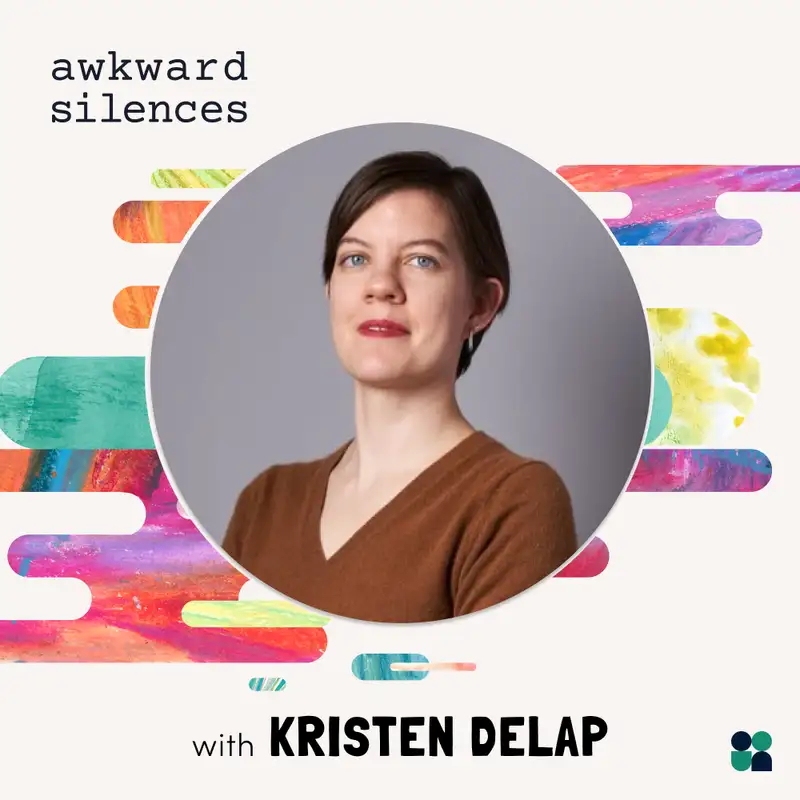
#184 - Use Context For More Influence with Kristen DeLap of Econify
Kristen [0:00:00]: Is there a single customer story that explains your road roadmap better than your road roadmap explains your road roadmap?
Kristen [0:00:06]: Because a road roadmap is difficult to get across.
Kristen [0:00:09]: It's that big meeting.
Kristen [0:00:10]: Don't have a big meeting.
Kristen [0:00:11]: Kind of thing.
Kristen [0:00:12]: Right?
Kristen [0:00:12]: Like, a road map presentation is a big meeting.
Kristen [0:00:14]: So don't do that.
Kristen [0:00:15]: See if there's a single customer story that you can find that actually tells the story of the product and where you're headed better.
Kristen [0:00:22]: Just saying we want them to move from x to y on a map is very different than explaining the emotional investment that a user has in it.
Intro/Outro [0:00:33]: Hey.
Intro/Outro [0:00:33]: This is Erin May, and this is Carol Guest.
Intro/Outro [0:00:35]: And this is Awkward Silences.
Intro/Outro [0:00:39]: This is Brought to you by User Interview.
Intro/Outro [0:00:43]: The fastest way to recruit targeted high quality participants for any kind of research.
Ben [0:00:53]: Hey, it's Ben.
Ben [0:00:54]: Welcome Awkward Silences.
Ben [0:00:55]: My guest today is Kristen DeLap.
Ben [0:00:57]: The fractional COO at Econify.
Ben [0:01:00]: Kristen has got a ton of experience, str the business side of companies, the decision making executive fears and the product and design Ux will, And so I thought she would be a great guest to both talk about the state of design, what's happening visa V Ai, the changes in team structures, certainly some of the head count tightening.
Ben [0:01:23]: But primarily we talk about.
Ben [0:01:25]: Influence and context.
Ben [0:01:27]: You're gonna hear a lot in this conversation.
Ben [0:01:29]: Kristen has just some great philosophies and strategies and even exercises on how you, whether you're an Ic see, designer, product person, maybe you're a researcher supporting a designer or product on group.
Ben [0:01:41]: She just has some great ways for you to think about your work how to maintain the craft but have more influence to get more stuff done with the work that you're already spending so much time to us.
Ben [0:01:53]: I hope you enjoy the conversation.
Ben [0:01:55]: Here is Kristen DeLap on Awkward Silences.
Ben [0:01:57]: Enjoy.
Ben [0:01:58]: Hey, Kristen.
Ben [0:02:05]: Nice to see you.
Kristen [0:02:06]: Hi, Ben.
Kristen [0:02:06]: So good to see you.
Ben [0:02:08]: Welcome to Awkward Silences.
Ben [0:02:08]: I'm glad I could take a bit of your time.
Ben [0:02:11]: We have, I have a lot of questions for you about design, the state of design, I think designers, those who create either.
Ben [0:02:20]: Wanna talk a little bit about your interior design background and how you worked with physical mediums.
Ben [0:02:25]: Is that the right way to see that?
Ben [0:02:26]: Look at me.
Ben [0:02:27]: And then how you translated those skills and what's still relevant in industry.
Ben [0:02:32]: But before we get it all to all that, Walk me through that moment, maybe post college.
Ben [0:02:38]: I don't know if it was immediately after graduation.
Ben [0:02:40]: A lot of designers get out of the either.
Ben [0:02:42]: Their training, their schooling, a boot camp, and they're sort of, like, oh.
Ben [0:02:45]: And maybe they don't have a thing?
Ben [0:02:47]: What was that moment like for you?
Ben [0:02:49]: How did you think about and assess the landscape?
Ben [0:02:51]: Where did you end up and how do you think you got there?
Kristen [0:02:54]: Yeah.
Kristen [0:02:54]: So I went to school for interior design.
Kristen [0:02:57]: It was a a design school where I focused on interior.
Kristen [0:03:00]: So we we learned a lot of many different design disciplines.
Kristen [0:03:03]: I would say, the Internet was very nascent at that time, but I actually do remember a class where we designed a website using Dream weaver when it was still owned by macro media.
Kristen [0:03:13]: Like, before Adobe got it.
Kristen [0:03:15]: Yeah.
Kristen [0:03:15]: So early.
Kristen [0:03:16]: But, you know, really kind of overall design thinking.
Kristen [0:03:18]: Right?
Kristen [0:03:19]: And, like, learning a lot of design principles and kind of building that foundation from that.
Kristen [0:03:23]: When I left school, I actually mentioned into retail design.
Kristen [0:03:27]: So joined crate and barrel and was a store designer there for a bit, which was super fun.
Kristen [0:03:33]: And then pivoted to, which was a designed textile company.
Kristen [0:03:38]: And so having that, the, like, really physical tangible product was super great.
Kristen [0:03:44]: But I found myself actually bringing a lot of my design thinking to the internal systems and digital tools of the company.
Kristen [0:03:51]: I was a little bit more on the sales side there and realize that we needed better, processes.
Kristen [0:03:59]: And so brought a lot of the design thinking around, like, user centered problem solving into...
Kristen [0:04:06]: We actually ended up designing and building an ios app that was used for the sales folks processes to use this, like a crm, ended up modernizing the website.
Kristen [0:04:14]: So really, again, not named roles at the time, but was kind of, like, a Ux researcher and a design manager and a product manager kind of brought into one.
Kristen [0:04:24]: Because it, I mean, design is just about that is it about human centered problem solving.
Kristen [0:04:30]: Right and trying to shape environments whether they're digital or physical.
Kristen [0:04:34]: And so...
Kristen [0:04:35]: Yeah.
Kristen [0:04:35]: So the...
Kristen [0:04:36]: To your point, like, the medium changes, but the principles of design don't.
Kristen [0:04:40]: France, you can really kind bring that through.
Ben [0:04:43]: Yeah.
Ben [0:04:43]: That's that's what I love about your background and why having you on settings so valuable because you still have a commitment to creativity to craft and not but, and you don't let that Cloud opportunities.
Ben [0:04:54]: I mean, you you jumped right into the sort of sales y go to market part of business, which I think for some, not all, but some designers is like, oh, what, how could I work there?
Ben [0:05:04]: But you're outlining how design thinking, process orientation, thinking in systems, which I know many designers are savvy about all those things helped.
Ben [0:05:12]: Were there anything else that stuck up to you in that early part of your career that you, like, you were like, wow.
Ben [0:05:17]: I...
Ben [0:05:17]: As a designer, I can bring this know, unique skill to this unique value to, again, what you were doing broadly to find.
Kristen [0:05:23]: Yeah.
Kristen [0:05:23]: I mean, I think that the other thing that designers do so well that has been super valuable to me really at every step is...
Kristen [0:05:31]: You challenging assumptions.
Kristen [0:05:32]: And so as a designer, you're always trying to think like, is there a better way to solve this problem?
Kristen [0:05:37]: Is the standard what we done previous, what's gonna take us into the future?
Kristen [0:05:41]: Right Like, how are we evolving this interaction.
Kristen [0:05:44]: And if you think about that in terms of your own career or a business, right?
Kristen [0:05:50]: To how an organization works, like challenging assumptions is really what can propel you.
Kristen [0:05:55]: Right.
Kristen [0:05:56]: There's some nuance there, Like, you have to do it diplomatic and, you know, like, kind of within constraints and that kind of thing.
Kristen [0:06:01]: But for me, looking to see where we had just been doing things the same way for...
Kristen [0:06:08]: Too long, both at Maher on the textile company and then at Herman Miller and Miller Noel, that is what really boosted my career and my influence honestly as we're thinking about kind of that trajectory.
Kristen [0:06:19]: So I think that's a huge one that design can bring to a table consistently everyone's just trying to iterate to get to the most successful outcome.
Kristen [0:06:26]: And if you can, like, put your spin on that, that's great.
Kristen [0:06:29]: Yeah.
Ben [0:06:30]: Oh, and we're gonna get to that influence in your ability and I hope listeners are pausing this and writing down the ways that Kristen is talking about this because that's...
Ben [0:06:38]: You've been in these spaces and places.
Ben [0:06:40]: You've developed this language because you've had to do it.
Ben [0:06:43]: So right now, you are a fractional COO .
Ben [0:06:46]: What is that?
Kristen [0:06:48]: Sure.
Kristen [0:06:48]: Yeah.
Kristen [0:06:49]: So a fractional COO is...
Kristen [0:06:51]: You could say, like, a per time or a contract chief Operations officer.
Kristen [0:06:55]: So I think about it in terms of being a really embedded operator into an organization, but then also kind of a systems builder, but you don't have the permanent attachment, So it can be for part time throughout the week or a a limited engagement.
Kristen [0:07:10]: Fractional work is is really booming right now.
Kristen [0:07:13]: It's really interesting.
Kristen [0:07:14]: Sure.
Kristen [0:07:14]: I think a lot of fractional chiefs are often kind of strategic advisors to a Ceo or to a founder, which is also a really great way to kinda get to the heartbeat of an organization really quickly, which is nice.
Kristen [0:07:26]: But pivoting into operations has been fascinating to me.
Ben [0:07:31]: Yeah.
Ben [0:07:31]: I wanted to ask about that because it feels like another tool kit, not even a tool in the kit, like, you're adding kind of meta.
Kristen [0:07:40]: Right?
Kristen [0:07:40]: Exactly.
Kristen [0:07:40]: Getting a whole new box in here.
Kristen [0:07:41]: Right?
Kristen [0:07:42]: So, you know, every design leader, every product leader is actually already doing ops.
Kristen [0:07:46]: Right?
Kristen [0:07:47]: Like...
Kristen [0:07:47]: And now, design ops and Ux ops or their own kind of practice areas even.
Kristen [0:07:52]: Right?
Kristen [0:07:53]: And so it's about taking those fundamentals and scaling that to the larger business, not just like the single product area.
Kristen [0:08:00]: Or practice area.
Kristen [0:08:01]: But operations requires a lot of product thinking?
Kristen [0:08:05]: So is this the right problem to solve?
Kristen [0:08:07]: How are we scaling this?
Kristen [0:08:09]: Is this repeatable for the business over time?
Kristen [0:08:12]: Like, what does the evolution of this look like?
Kristen [0:08:14]: What's our decision?
Kristen [0:08:15]: What's our prioritization process?
Kristen [0:08:17]: Like, all of the things that you need in a product team are the same things that you're...
Kristen [0:08:21]: You can take to the operations sphere?
Kristen [0:08:23]: It's just in a different scale.
Kristen [0:08:25]: Right?
Kristen [0:08:26]: So the agency I'm working for right now is called the Con.
Kristen [0:08:29]: It's a boutique engineering firm, they've really spent the last decade or so helping products led organizations with kind of super large scale and mission critical initiatives.
Kristen [0:08:39]: So we're talking about high traffic consumer platforms like, discovery and Nbc and endeavor streaming and helping them launch and strengthen their digital and streaming experiences.
Kristen [0:08:50]: So it's a big pivot for me from, like, the furniture world.
Kristen [0:08:54]: Right?
Kristen [0:08:55]: Into this But I'm learning a lot, and I'm closer to engineering than I ever have been, which has been really great for my own knowledge.
Kristen [0:09:02]: And again, kind of adding that toolbox like you said, I think design should always be getting closer to engineering.
Kristen [0:09:07]: So I'm really excited about that.
Ben [0:09:09]: Kristen because you are working so much more closely with engineers.
Ben [0:09:12]: Is there something that you, have learned lately or something you've picked up and that you have found is helpful both in your operations work or just being a sort of design thinker more generally?
Kristen [0:09:22]: I think...
Kristen [0:09:22]: I mean, the number one thing about working with any other group is curiosity.
Kristen [0:09:24]: Right?
Kristen [0:09:25]: But I think especially and we'll probably talk about this.
Kristen [0:09:28]: But with Ai and the way that that's affecting engineers working and work processes.
Kristen [0:09:33]: Right?
Kristen [0:09:33]: So So many engineers are at different phases of where they're at kind of in this Ai journey and the tools that they're using.
Kristen [0:09:41]: And so then the way that they interface with designers or product managers or anyone else that they're working with then is different.
Kristen [0:09:48]: Right?
Kristen [0:09:49]: And so I think I have learned that all groups, you cannot just lump engineering together as if they're doing one thing, you know, as if every engineer is doing the same thing.
Kristen [0:09:58]: And so, like, really getting curious about what their individual processes are as far as development and testing and that kind of thing.
Kristen [0:10:06]: Because right now, they're more all over the map than they've ever been.
Kristen [0:10:09]: So...
Kristen [0:10:09]: Yeah.
Kristen [0:10:10]: So I would just say, like, that has become really clear to me lately.
Ben [0:10:15]: Yeah.
Ben [0:10:15]: For my money, no group has...
Ben [0:10:18]: I mean, maybe designers, but no group...
Ben [0:10:20]: I mean, we're recording this on February thirteenth, No group this week has gone through more disruption with Ai than software developers and engineers.
Ben [0:10:27]: I mean, claude code.
Ben [0:10:28]: Open Ai codecs.
Ben [0:10:30]: I mean, we're we're talking about not sunset setting to use the tech term of that of that discipline, but a radical rethinking of what a software engineer on a Saas platform or in a product based ecosystem is doing.
Ben [0:10:42]: And I think design has been as Fig gets Sn and as even as Fig and other tools came around, democrat and making more accessible.
Ben [0:10:50]: Let's check in on the state of design.
Ben [0:10:52]: This is kinda of your home, your your home training, Your expertise.
Ben [0:10:55]: To today's designer, what should they pick up?
Ben [0:10:59]: What should they put down metaphorically speaking, tell me, you know, as someone who's been a designer and a and a leadership of designers, but how could you thinking about this?
Kristen [0:11:08]: There's a couple obvious things.
Kristen [0:11:09]: So absent actually that talking about that engineering relationship, like, claude just announced that they're coming into Fig jam.
Kristen [0:11:16]: Right?
Kristen [0:11:17]: So, like, yes.
Kristen [0:11:18]: Learn the tools of your trade.
Kristen [0:11:19]: Right?
Kristen [0:11:19]: Make sure that you are keeping up to date on those enhancements and, like, what's available and and that kind of thing.
Kristen [0:11:25]: But beyond that, the thing about design that can't go away that can't be replaced that can't be parcel out to an agent an Ai agent or something like that is judgment and orchestration.
Kristen [0:11:40]: So first of all, judgment around ethical judgment, taste, you know, all of those kinds of ways in which you bring a human into any of it, all of that continues to be the kind of core of design that will need to be there.
Kristen [0:11:55]: But also orchestration, which is, like, systems thinking, like we've talked about.
Kristen [0:12:00]: Right?
Kristen [0:12:01]: But making sure that you're sensitive to the context that you're in, making sure that you understand what the organization is, like, and bringing folks together.
Kristen [0:12:09]: Right?
Kristen [0:12:10]: So bringing processes together, bringing the approach of the business together.
Kristen [0:12:14]: And again, that goes into influence a little bit, but those kind of skills about understanding where design fits and where design can influence are gonna be more important than ever, Ai can generate a bunch of artifacts.
Kristen [0:12:27]: Right?
Kristen [0:12:28]: You can have it create designs.
Kristen [0:12:29]: Right?
Kristen [0:12:29]: From scratch right now.
Kristen [0:12:30]: But Ai cannot create alignment.
Kristen [0:12:32]: Right, across stakeholders across groups that need to be working together.
Kristen [0:12:37]: So that's...
Kristen [0:12:37]: That is key for sure.
Kristen [0:12:39]: And then the other thing is really just about the things that I've I've always said about design and product is, like, learn how your company makes money.
Kristen [0:12:46]: Speak in the language that your companies stakeholders and leadership understand and are meaningful to them.
Kristen [0:12:54]: Right?
Kristen [0:12:54]: So explaining why something matters is much more valuable than your ability to design it and Fig.
Ben [0:13:02]: So when you were thinking back to yourself as an Ic trying to learn about or get more influence.
Ben [0:13:08]: Was there a tactic that worked for you, and and it could be as simple as I booked meeting with my, you know, stakeholder stakeholder or my boss's boss.
Ben [0:13:14]: Is there something that a designer listening of this can do next week to try to start building that sense of how a company makes money or getting a lay of the land.
Ben [0:13:21]: You mentioned, you know, some of the politics of organizational cultures or something that you you would advise folks to do to get learning on that?
Kristen [0:13:28]: So I think there's a couple.
Kristen [0:13:29]: And it depends on the size of your business.
Kristen [0:13:30]: Right?
Kristen [0:13:31]: And kind of where you're working.
Kristen [0:13:32]: If there are shareholder calls or similar kind of public facing information that goes out, tune in.
Kristen [0:13:40]: How are your company leaders talking about the business to the larger public?
Kristen [0:13:45]: If and understand what they're saying.
Kristen [0:13:47]: Understand the questions that might be coming in from various shareholders and that kind of thing.
Kristen [0:13:51]: That information is just out there.
Kristen [0:13:52]: It can be really boring It can be really dry.
Kristen [0:13:54]: Right?
Kristen [0:13:55]: But it's still important to kind of understand.
Kristen [0:13:57]: If you are not working at a publicly traded company that has that kind of thing?
Kristen [0:14:01]: Like, what is your company doing?
Kristen [0:14:03]: Are there press releases that are coming out?
Kristen [0:14:05]: Or are there just, like, internal town halls that maybe are optional or that your...
Kristen [0:14:09]: Multitasking through that actually you maybe pay a little bit more attention to you.
Kristen [0:14:13]: Right?
Ben [0:14:14]: Yeah.
Kristen [0:14:15]: Try to get all the information that you can that is already out there and that you might have just thought, this doesn't really apply to me or this is for a different audience.
Kristen [0:14:22]: Right?
Kristen [0:14:23]: Try to pull that in and see what you can learn.
Kristen [0:14:25]: And then you can start asking more intelligent questions to your own leader or to, kind of cross functional leaders about what are their trade offs?
Kristen [0:14:34]: What are they trying to prioritize?
Kristen [0:14:35]: What are the different ways that they are making decisions within your.
Kristen [0:14:40]: Are the organizations that surrounds you kind of things.
Kristen [0:14:43]: So all of that information that you can get to kind of frame the context of how you're doing your work is super valuable.
Intro/Outro [0:14:51]: Awkward interruption.
Intro/Outro [0:14:52]: This episode of Awkward Silences like every episode of Awkward Silences is brought to you by user interviews.
Speaker_3 [0:14:58]: We know that finding participants for research is hard.
Speaker_3 [0:15:00]: User interviews is the fastest way to recruit targeted, high quality participants for any kind of research We're not a testing platform.
Speaker_3 [0:15:08]: Instead, we're fully focused on making sure you can get just in time insights for your product development, business strategy, marketing and more.
Intro/Outro [0:15:16]: Go to user interviews dot com slash awkward to get your first three participants free.
Ben [0:15:23]: You said something both in our our prep document here and also something when we we chatted last about decision literacy.
Ben [0:15:29]: I like that you have not teased apart, but you've flagged that the craft is important, doing good design or doing good research or executing product management is good.
Ben [0:15:39]: And then ultimately, those things must go somewhere?
Ben [0:15:42]: And they have to go into someone's brain and then they go hop.
Ben [0:15:44]: Based on what Kristen just told me what Ben is sharing now, I should, what does design literacy mean and how does that work with what a designer does, or decision literacy and what what a designer does day in and day.
Kristen [0:15:56]: Yeah.
Kristen [0:15:56]: I mean, so decision literacy is knowing how decisions are made in your organization.
Kristen [0:16:02]: And that is different in every.
Kristen [0:16:04]: And there can be written frameworks if the way decisions get made and then your organization doesn't actually follow those.
Kristen [0:16:11]: It's a little bit like, having an org chart and then knowing what jurisdiction really looks like in your org right.
Kristen [0:16:16]: So you have to kind of, like, figure that out So how are we saying that we make decisions?
Kristen [0:16:20]: Right?
Kristen [0:16:20]: Like, how are we talking about them?
Kristen [0:16:21]: But then actually when it comes time for prioritization between features.
Kristen [0:16:26]: Right?
Kristen [0:16:26]: Or what are we gonna work on?
Kristen [0:16:28]: Or what are our priorities for this quarter?
Kristen [0:16:31]: So how are those decisions getting made?
Kristen [0:16:33]: Is it coming from the top down?
Kristen [0:16:36]: Is it someone got a call from a board member?
Kristen [0:16:38]: And suddenly that's the most important feature you need to put on the website?
Kristen [0:16:41]: Is it coming from a specific group?
Kristen [0:16:43]: Like, are you a sales led organization.
Kristen [0:16:45]: So if sales says this is what we need for this client?
Kristen [0:16:48]: That's the thing that's always going to happen.
Kristen [0:16:50]: Right?
Kristen [0:16:50]: So, like, understanding where who has a Trump card kind of thing is very important.
Kristen [0:16:55]: And in the lack of that, who is influencing these decisions.
Kristen [0:16:59]: Right?
Kristen [0:16:59]: Or what information is influencing these physicians.
Kristen [0:17:02]: Like, where is the data coming from and how is that analyzed and weighed and and that kind of thing.
Kristen [0:17:07]: So, again, it's very different for every organization.
Kristen [0:17:10]: It could be different for different teams inside of an organization too.
Kristen [0:17:13]: So kind of understanding that kind of thing.
Kristen [0:17:15]: So that decision literacy is really just, like, being able to get the lay of the land of how it's happening.
Kristen [0:17:21]: And then...
Kristen [0:17:22]: I mean, try to influence changing that if you want if you don't think that it's the best way to be doing it, but maybe more importantly, understand how to work within it.
Ben [0:17:31]: Yeah.
Ben [0:17:31]: I so appreciate that that context is the word that I think of when you're sharing all that.
Ben [0:17:36]: And it's on my mind not only because it...
Ben [0:17:38]: I'm hearing it so much from a range of Ux professionals, research product design, insights folks wherein...
Ben [0:17:44]: They have a bucket of skills, a toolbox, and they might take it to different companies and to your point.
Ben [0:17:49]: The team is different.
Ben [0:17:50]: The problems they're trying to solve are different.
Ben [0:17:52]: The industry is different and all of that information that many Ux folks are so good at doing with their customers, asking what the pain points were trying to figure out what's not working, blind spots that the company is missing all of that can and should be turned inward.
Ben [0:18:08]: Does your primary stakeholder work later?
Ben [0:18:10]: Because they've got care work in the morning?
Ben [0:18:12]: I know it might not be an immediate concern to like, what you're trying to ship, but it definitely is a concern when they're trying to make a decision or listen to you and or read your reports or not.
Ben [0:18:20]: I'm not saying you as the designer or professional need to totally con yourself, but you are a part of an ecosystem.
Ben [0:18:27]: And I think that adaptation is really important.
Kristen [0:18:30]: Yeah.
Kristen [0:18:30]: And that lens treating your stakeholders and your teammates like your users is great.
Kristen [0:18:37]: We're good at this.
Kristen [0:18:38]: Right?
Kristen [0:18:38]: This is the thing that we understand.
Kristen [0:18:40]: We're curious about...
Kristen [0:18:41]: People.
Kristen [0:18:41]: We're curious about their motivations.
Kristen [0:18:43]: We're curious about the problems that they encounter.
Kristen [0:18:45]: Put that towards your coworkers.
Kristen [0:18:47]: Put that towards your colleagues.
Kristen [0:18:48]: Yeah.
Kristen [0:18:49]: Use those skills that direction.
Ben [0:18:51]: Well I wanna turn out to you as a leader.
Ben [0:18:53]: Someone who has been on the Ic and principal track and then don't know if it's made the change to, but matured into evolve, took the leap into leadership.
Ben [0:19:02]: I wanna start by your philosophy.
Ben [0:19:03]: I love to hear leaders philosophies you have been in physical goods with digital presence.
Ben [0:19:10]: You've done storefront fronts.
Ben [0:19:11]: You've had a lot of different types of product experiences if we could call it or or omni channel experiences and doubt that has impacted or or shaped your leadership style.
Ben [0:19:20]: How would you describe it?
Kristen [0:19:22]: Yeah.
Kristen [0:19:22]: So as a leader, I have personally had to focus on, kind of creating the conditions where people can do their best work.
Kristen [0:19:31]: The thing that I can help folks get to is that context is controlling the conditions around them, because what you want to do is enable people to be their best person to be their best worker to be their best coworker or to be their best colleague, that kind of thing.
Kristen [0:19:47]: So whatever I can do to create those conditions is where I do it.
Kristen [0:19:52]: And I think that that's evolved because I have been in many organizations.
Kristen [0:19:57]: I've seen, like, how fragile trust is.
Kristen [0:20:00]: Right?
Kristen [0:20:01]: Is really hard to build trust within a team.
Kristen [0:20:03]: It's hard to build trust between leaders and kind of the general population.
Kristen [0:20:07]: And everyone has seen this, but how your work setting really affects your work?
Kristen [0:20:13]: Not only what team you're in, but where are you sitting in the office?
Kristen [0:20:16]: Are you in the office or not?
Kristen [0:20:18]: Right?
Kristen [0:20:18]: Are you on back to back?
Kristen [0:20:20]: Zoom calls all day?
Kristen [0:20:21]: Can you whiteboard with your team or?
Kristen [0:20:23]: Are you all distributed in a way that that's not possible.
Kristen [0:20:26]: Right?
Kristen [0:20:26]: Like, so how you build trust and how you work are intertwined to me?
Kristen [0:20:32]: And so I've really moved into this idea of.
Kristen [0:20:35]: What is the systems here?
Kristen [0:20:37]: Right?
Kristen [0:20:37]: I think Said that so many times.
Kristen [0:20:38]: Like, what is the systems around how we work and how we build the team, And what is the culture of that?
Kristen [0:20:45]: And culture is a word that gets thrown around a lot.
Kristen [0:20:48]: But to me, culture is really how the decisions get made.
Kristen [0:20:52]: What are we doing when no one is watching.
Kristen [0:20:53]: That is culture.
Kristen [0:20:55]: Right?
Kristen [0:20:55]: And so I wanna make sure that we have a culture that's around clarity and psychological safety, and I'm big on accountability and meeting expectations, but ideally without the drama that comes with a lot of politics.
Kristen [0:21:10]: Right?
Kristen [0:21:10]: So...
Kristen [0:21:11]: And then, yeah, building good decision hygiene so that people understand how decisions are made, and and how they can meet expectations.
Kristen [0:21:18]: Right?
Kristen [0:21:18]: So...
Ben [0:21:19]: Yeah.
Ben [0:21:19]: Yeah.
Ben [0:21:20]: What was the thing that you strike me music a very prepared, ready to go person not to say that you're not innovative and embrace sort of scrap us and when needed.
Ben [0:21:29]: But what surprised you about your first roles or time in leadership.
Ben [0:21:33]: Like, what were you like, man?
Ben [0:21:34]: They told me this or I had a colleague say this, but they were right or what was it that stood out to you when you first took that those leadership positions?
Kristen [0:21:42]: Before I was really seen as a leader.
Kristen [0:21:44]: Right?
Kristen [0:21:45]: You see a lot of folks going to meetings that you're not invited to.
Kristen [0:21:48]: And you're like, if I could just be a part of that meeting.
Kristen [0:21:51]: Right?
Kristen [0:21:51]: Like, if I could just hear what is going on, if I could just see what is happening, then I would know, then I would be able to level up.
Kristen [0:21:58]: I would be able to get my worked done better.
Kristen [0:22:00]: I would...
Kristen [0:22:00]: You know, we would be able to launch this thing on time.
Kristen [0:22:02]: Whatever the thing is.
Kristen [0:22:03]: Right?
Kristen [0:22:04]: And then you get in those meetings And you're like, this is a mess.
Kristen [0:22:08]: This doesn't help me.
Kristen [0:22:09]: This doesn't provide more clarity.
Kristen [0:22:11]: This doesn't provide more direction and I guess I naive thought that the leaders had it together than I did.
Ben [0:22:20]: These were the adults.
Kristen [0:22:21]: Right?
Kristen [0:22:21]: That they were the adults.
Kristen [0:22:22]: Right?
Kristen [0:22:22]: That you would, like, move away from the kitty table and that you would like, kind of walk out with this clarity.
Ben [0:22:27]: It's the big fork in the big knife, and you get to cut your own.
Ben [0:22:29]: Yeah.
Kristen [0:22:30]: Yeah.
Kristen [0:22:30]: Exactly.
Kristen [0:22:30]: And it...
Kristen [0:22:31]: That wasn't it.
Kristen [0:22:32]: You get out of any part what you put in.
Kristen [0:22:34]: To it.
Kristen [0:22:34]: Right?
Kristen [0:22:35]: And so there's no walking into these rooms and just listening and being like, oh, yeah.
Kristen [0:22:39]: Okay.
Kristen [0:22:39]: I mean, there are sometimes.
Kristen [0:22:40]: Right?
Kristen [0:22:41]: There are fantastic leaders in the world.
Kristen [0:22:42]: There are, like, really highly functioning teams, Like, but generally speaking, just like being in the room does not make you a leader.
Kristen [0:22:51]: It's a thing that you have to get really step into and kind of take on.
Kristen [0:22:54]: And so I think that was the thing that surprised me the most.
Kristen [0:22:57]: And disappointed me, I think, which is also a driver.
Kristen [0:23:00]: Right?
Kristen [0:23:01]: And so I am a firm believer that you can learn as much from a bad experience as you can from a good one.
Kristen [0:23:06]: And so, yeah, I think that it did help shape me, but not in the way that I had anticipated that it would.
Kristen [0:23:13]: Yeah.
Ben [0:23:14]: Well, I wonder if the the extent to which Not I wonder.
Ben [0:23:16]: I'm betting that those moments of sort of...
Ben [0:23:19]: Oh, this is kind of a mess.
Ben [0:23:20]: Likely impacted the way that you coached and ups skilled your own team when it came time for them to translate their heavy design craft or their Ux work into those spaces you being there, like, these folks can't remember what dinner plans they have this afternoon, let alone, what we have to ship why we're shipping it and, you know, the improvements it'll make.
Ben [0:23:40]: Did that context we keep using it play into your vision?
Ben [0:23:44]: Because you talk a lot about decision driven design that design should be high skilled and it should do something?
Ben [0:23:50]: It should move something forward.
Ben [0:23:51]: Did that kind of spark some of those conversations?
Kristen [0:23:54]: Yeah.
Kristen [0:23:54]: Definitely.
Kristen [0:23:54]: And I think it mainly realize everyone is is there for a different reason and is listening to different things and it's a little bit like the telephone game.
Kristen [0:24:03]: Right?
Kristen [0:24:03]: Like, you can say the same thing to everyone and and everyone pulls something different out of it.
Kristen [0:24:07]: And that is what those meetings are are often.
Kristen [0:24:09]: And so it definitely made me understand that you have to learn the language of each functional area, so then teaching that to my own team to say, like, okay.
Kristen [0:24:20]: When you are talking to x stakeholder or ex roof.
Kristen [0:24:23]: This is how we're gonna frame this so that they understand it so that it resonates with them.
Kristen [0:24:28]: And you can actually have a conversation.
Kristen [0:24:32]: Right?
Kristen [0:24:32]: So...
Kristen [0:24:32]: And we've talked a lot about influence and what that looks like.
Kristen [0:24:36]: And the...
Kristen [0:24:37]: Those are the key ways in which I talked to folks about how to have influence as well.
Kristen [0:24:41]: I mean, designers and product managers never have jurisdiction over what they want to just from an organizational power kind of perspective.
Kristen [0:24:49]: Right?
Kristen [0:24:49]: So it is all through influence.
Kristen [0:24:51]: And influences about translation and being able to tell someone what they need to hear in a way that they can hear it.
Kristen [0:25:01]: It's about consistency, so being able to show up in ways that they're expecting you to or exceeding their expectations.
Kristen [0:25:07]: And it's about proximity to decisions.
Kristen [0:25:10]: So being able to get as close as you can to the rooms where it's happening or the conversations where it's happening, and then being able to bring those other skills with you.
Kristen [0:25:18]: But I think that that's a big thing at that I've taught is that you don't have to have more information than someone else.
Kristen [0:25:24]: Right?
Kristen [0:25:24]: Like, you don't have to have better data than someone else.
Kristen [0:25:26]: They don't know more than you necessarily just because they're above you or or a leader of someone else on your team.
Kristen [0:25:31]: But what you need to be able to do as a designer as a product person as just of as a user centered thinker in general is to be able to help people see the risks and the gains of what's coming.
Kristen [0:25:44]: And the risks and the gains and how it's gonna affect them personally or their team personally or their their work personally.
Kristen [0:25:50]: Right?
Kristen [0:25:51]: So if you can identify a name what someone is trying to protect, that's where you can move a conversation forward with them.
Ben [0:25:58]: Kristen, one of the things that I hear or...
Ben [0:25:59]: I don't, I wouldn't call it a problem, but I...
Ben [0:26:01]: Lots of designers and researchers put a lot of weight on the share out or the deliverable And no doubt it's a moment where you are with your stakeholders and decision makers and the thing you think should be done is in front of the people who could potentially do it.
Ben [0:26:15]: How can they make the most of that moment.
Ben [0:26:17]: What are some things that you and your teams have done to make the most of that sort of decision moment.
Ben [0:26:22]: Aside from...
Ben [0:26:23]: Know your stakeholder and map out a bit of the context when you're there with the stakeholder.
Ben [0:26:26]: Anything that has worked?
Kristen [0:26:28]: So I think there's two things.
Kristen [0:26:29]: One try to minimize that moment.
Kristen [0:26:32]: If you can.
Kristen [0:26:33]: So it's less about having one big thing and more about trickling them information throughout.
Kristen [0:26:39]: Right?
Kristen [0:26:39]: So you're providing a bread crumb and that you're leading them in the direction that you want to lead them in you're provoking their kind of curiosity around it.
Kristen [0:26:48]: Right?
Kristen [0:26:48]: And you're making sure that you're on the right track.
Kristen [0:26:51]: That this is resonating.
Kristen [0:26:52]: Right?
Kristen [0:26:53]: So my first advice would be, like, don't have a big moment.
Kristen [0:26:55]: Try to keep it rolling as an ongoing type of thing, which is also good for relationships.
Kristen [0:26:59]: Right?
Kristen [0:27:00]: Like, more kind of touch points.
Kristen [0:27:01]: The other thing that I would do is I would just try to make sure that you can tie it to the impact and the decision explicitly.
Kristen [0:27:13]: Right?
Kristen [0:27:13]: So I think sometimes, especially these Ux researchers, points and designers who are talking about research.
Kristen [0:27:18]: We're all about insights.
Kristen [0:27:20]: Right?
Kristen [0:27:20]: Like, here's this great insight that we had.
Kristen [0:27:22]: And that's fun.
Kristen [0:27:23]: Those are COO l, and those are really great to talk to each other about.
Kristen [0:27:26]: And sometimes your marketing friends will love that.
Kristen [0:27:29]: And that kind of thing Right?
Kristen [0:27:30]: But there is a lot of audience that is just like, so what?
Kristen [0:27:33]: You know, like, okay Yes.
Ben [0:27:36]: Yeah.
Kristen [0:27:36]: Now what?
Kristen [0:27:36]: What do I do with that?
Kristen [0:27:37]: Thank you, But...
Kristen [0:27:38]: Okay.
Kristen [0:27:39]: Moving on.
Kristen [0:27:39]: You know?
Ben [0:27:40]: Like, thank you.
Kristen [0:27:42]: Yeah.
Kristen [0:27:42]: And so you need to tie that insight to some sort of decision or action.
Kristen [0:27:47]: This is a thing that that person can do with that insight or that you want to do with that insight on behalf of that person.
Kristen [0:27:54]: So try to figure out what they're going after and frame it in in that kind of implication to their work.
Ben [0:28:01]: I love that.
Ben [0:28:01]: I think so often in our space, we think of the insight as something or we describe the insight as something that on its own, we'll do all the work.
Ben [0:28:08]: I will drop the insight and the sticker roll will go, Oh, my gosh.
Ben [0:28:12]: They'll take it and they'll go push it into whatever, you know, leadership board.
Ben [0:28:17]: I'm this is terrible analogy.
Ben [0:28:18]: But I love that the insight can be something that is very insightful.
Ben [0:28:22]: I don't wanna make this all goal, but you gotta put some action behind it.
Ben [0:28:26]: I love the the so what or now what sort of framework.
Ben [0:28:28]: Like you've told us the what, but now what?
Kristen [0:28:31]: Right.
Kristen [0:28:31]: What do we do?
Kristen [0:28:32]: Everyone just wants to know what to do.
Kristen [0:28:34]: Right?
Kristen [0:28:34]: Like, yeah.
Kristen [0:28:35]: So tell them what to do.
Ben [0:28:37]: And speaking of telling folks what to do, you recently posted a great heuristic, I'll say, called storytelling via road maps I'm linkedin.
Ben [0:28:43]: I'll I'll drop it in the show notes below, but I think it's nice because it's a team wide exercise or a team wide way of thinking, what is...
Ben [0:28:50]: Storytelling via road roadmap?
Ben [0:28:52]: And how have you found it to be valuable for product and design teams trying to build that influence coach stakeholders into the influence impact that product and design teams can have, etcetera?
Kristen [0:29:01]: Yeah.
Kristen [0:29:01]: I definitely.
Kristen [0:29:02]: This is one that I think is really important what that designers and product work on together.
Kristen [0:29:06]: So maps are this, like artifact that are the holy grail or something.
Kristen [0:29:12]: Right?
Kristen [0:29:12]: It's just like this chiseled in stone sometimes, type of thing that we t out when we wanna show our our efficiency and our innovation and and that kind of thing.
Kristen [0:29:22]: And that's great.
Kristen [0:29:23]: And some organizations really need that.
Kristen [0:29:25]: I'm not even trying to make too much fun of of maps.
Kristen [0:29:28]: Right?
Kristen [0:29:28]: Like, they're a necessary tool.
Ben [0:29:30]: Sure.
Kristen [0:29:30]: But Sure.
Kristen [0:29:30]: I think that a lot of times we miss the part where how we make road roadmap important to everyone, and that's through storytelling.
Kristen [0:29:37]: Designers are good at storytelling.
Kristen [0:29:39]: Right?
Kristen [0:29:39]: That is part of it.
Kristen [0:29:40]: And so that exercise was focusing on this idea of, like, is there a single customer story that explains your road map better than your road roadmap explains your road roadmap.
Kristen [0:29:51]: Because a road roadmap is difficult to get across.
Kristen [0:29:54]: It's that big meeting.
Kristen [0:29:56]: Don't have a big meeting.
Kristen [0:29:57]: Right?
Kristen [0:29:57]: Like, kind of thing Right?
Kristen [0:29:58]: Like, a road map presentation is a big meeting.
Kristen [0:30:00]: So don't do that.
Kristen [0:30:01]: See if there's a a single customer story that you can find that actually tells the story of the product and where you're headed better.
Kristen [0:30:08]: And that story is, like track backwards from some sort of urgent thing that you found.
Kristen [0:30:14]: So a deadline, a, mistake pan off.
Kristen [0:30:18]: What is the pain point that your user carries...
Kristen [0:30:21]: What is their dilemma?
Kristen [0:30:23]: What is the biggest dilemma that they're having?
Kristen [0:30:24]: What is carrying emotional weight for them and then figure out what that is?
Kristen [0:30:28]: And what is the story behind it?
Kristen [0:30:30]: Are they confused and that upsets them is their risk?
Kristen [0:30:32]: Is there a comp conclusion?
Kristen [0:30:34]: Is it a desire?
Kristen [0:30:35]: Are they trying to buy something.
Kristen [0:30:36]: What is that thing?
Kristen [0:30:36]: And then try to spin the contextual story around that moment?
Kristen [0:30:41]: And figure out what kind of friction they've learned to tolerate?
Kristen [0:30:45]: Are we getting in their way are they getting in their own way?
Kristen [0:30:48]: What other tools are they using better?
Kristen [0:30:51]: Outside of our tool, and all of that are things that affect your road roadmap and solutions you might have put on your road map already, but just saying, we want them to move from x to y on a map is very different than explaining the emotional kind of investment that a user has in it.
Kristen [0:31:06]: So it's just one way to talk about the kind of necessity of of where you're headed and what you wanna build, but in a way that's...
Kristen [0:31:12]: Really, everyone is going to be more entertained and engaged by, but also hopefully, like, be able to take out to their people.
Kristen [0:31:20]: Right?
Kristen [0:31:20]: Okay.
Kristen [0:31:21]: Digital marketing team.
Kristen [0:31:22]: I just learned that the reason we're doing this is because the users are having this problem, and then they head off in that direction.
Kristen [0:31:27]: So Yeah.
Kristen [0:31:28]: I mean I'm big on team exercises with anyway.
Kristen [0:31:31]: I I published a lot of them on Linkedin or on my website as ideas of, like, this helps us solve a problem, but it also helps us as a team to gain kind of clarity and together.
Ben [0:31:42]: Yeah.
Ben [0:31:42]: I am always not struck by it.
Ben [0:31:45]: But for all the conversations that I hear from designers and Pms and researchers about, like, I keep being asked about sample size.
Ben [0:31:51]: So I try to make my stuff really rigorous so that when we're shaping a road roadmap, there's some general and, like, there's a Tam associated to it.
Ben [0:31:59]: And then when the executives that in stakeholder meetings I've been with, the executives ask about that person in the video where they ask about that quote because they're humans making stuff for other humans.
Ben [0:32:08]: And so I'm not saying, don't do your due diligence and don't have a sense of the consistency or the the persistence of a thing.
Ben [0:32:15]: But also to your point, Kristen bringing in that story.
Ben [0:32:17]: I mean, that's...
Ben [0:32:18]: This is why personas are so popular.
Ben [0:32:20]: People like to make stuff for other people.
Ben [0:32:22]: And we can kinda get carried away that, like, Molly the midsize business owner, you know, maybe we're making too much, but I like the idea behind remaining human in when you're sharing and having the the craft and the science behind what you're doing.
Kristen [0:32:35]: Back it up.
Kristen [0:32:35]: For sure.
Ben [0:32:36]: Yeah.
Ben [0:32:36]: Exactly.
Ben [0:32:36]: Yeah.
Ben [0:32:37]: But we do.
Ben [0:32:38]: The marketing team will love to see so and so from such and such small business owner having this problem.
Ben [0:32:42]: The guess what?
Ben [0:32:43]: That's where our company exists to solve that thing.
Ben [0:32:46]: And that's good.
Ben [0:32:47]: That's a good rallying, Cry.
Ben [0:32:48]: And I think for executives they really like that too.
Kristen [0:32:50]: For sure.
Kristen [0:32:50]: And sales.
Kristen [0:32:51]: Right?
Kristen [0:32:51]: Like, every...
Kristen [0:32:52]: Everyone.
Kristen [0:32:53]: Yeah.
Kristen [0:32:53]: It's really important.
Ben [0:32:55]: And designers and Pms, they have access to this stuff.
Ben [0:32:57]: And so I love that it's...
Ben [0:32:58]: You're not asking folks to rethink holy what they're doing.
Ben [0:33:01]: It's to keep the craft, keep the high touch, keep your skill set, keep it sharp, and then remember where you're going with it that you're...
Ben [0:33:09]: You're going into a group.
Ben [0:33:10]: I just love the like, that's fun.
Ben [0:33:11]: That's a fun little insight.
Ben [0:33:12]: That's nice.
Ben [0:33:13]: What do I do with?
Ben [0:33:14]: You're handing them a bubble and you're saying, like, look at this COO l thing I made?
Ben [0:33:18]: They're I'm like, nice.
Ben [0:33:19]: Is this why we're here?
Ben [0:33:20]: And so I think that's you don't mean to be flip about it, but it's the realities of working in any sort of business.
Kristen [0:33:26]: Exactly.
Kristen [0:33:26]: Yeah.
Kristen [0:33:27]: And increasingly so.
Kristen [0:33:28]: Right?
Kristen [0:33:29]: Like, business is getting business here.
Kristen [0:33:30]: The bottom lines are getting tighter, budgets are getting tighter resources are getting thinner, we have to be responding to that environment.
Ben [0:33:39]: Yeah.
Ben [0:33:39]: And to that point, we've heard a bit about your leadership philosophy, I want you to talk me through how you think about bringing on new talent.
Ben [0:33:46]: When you've been in hiring meetings or you've been in interviews.
Ben [0:33:49]: When you've been someone who said I need some some more head count.
Ben [0:33:53]: Or I need someone to help us go to the next step.
Ben [0:33:54]: Are there things that have always stood out to you in candidates that you ultimately hire?
Ben [0:33:59]: Is there an exercise that you like to put candidates through, walk us through something that you've done that has helped you either identify a good fit or something you've heard from candidates show you that they have it.
Kristen [0:34:09]: Yeah.
Kristen [0:34:09]: I think that there's two things to think about generally, two buckets to think about generally.
Kristen [0:34:12]: So one is ultra and one is craft.
Kristen [0:34:17]: And in both of those scenarios think about before you even write a job description or before you begin, kind of any interview process.
Kristen [0:34:25]: Is think about where the holes on your team.
Kristen [0:34:27]: What do you need to add?
Kristen [0:34:29]: Not necessarily for that specific role maybe the project that they're working on, but, like, the team as a whole?
Kristen [0:34:35]: If you already have someone who has a particular strength.
Kristen [0:34:39]: You might need another one in the bench with that same one.
Kristen [0:34:42]: You want someone who complements that strength.
Kristen [0:34:44]: Right?
Kristen [0:34:45]: And so think about what that looks like from, craft perspective.
Kristen [0:34:50]: From a cultural perspective, it's kind of the same thing.
Kristen [0:34:53]: What voices are missing from your team.
Kristen [0:34:55]: Who else can you bring in that is gonna have a different experience, maybe someone who worked at an agency as opposed to enterprise, right or who has worked for startups as opposed to more mature organizations or what are the ways in which you can have different voices come into the room.
Kristen [0:35:11]: So I would say before you even get started, understand what you're looking for.
Kristen [0:35:15]: Right?
Kristen [0:35:16]: And then in the interviews as you're going through, you can be looking for those those different items, I love to just have kind of conversations with folks to understand the way in which they think.
Kristen [0:35:26]: Right?
Kristen [0:35:27]: Again, back to kind of decision literacy.
Kristen [0:35:30]: How are people making decisions.
Kristen [0:35:31]: How are they working through problems inside of their brain?
Kristen [0:35:34]: Like, both because I'm curious about that, about everyone in the world, but also about how would that fit in with the team and with the organization.
Kristen [0:35:41]: One of the questions that I've often asked is what trade off are you most uncomfortable making?
Kristen [0:35:47]: Designers and Pms a strong biases and come with that.
Kristen [0:35:53]: And so for them to know themselves and to be able to say what that is, then for some designers that might be completeness.
Kristen [0:36:02]: They don't believe in an Mvp kind of.
Kristen [0:36:04]: So they're really uncomfortable, you know, like pairing back kind of thing.
Kristen [0:36:08]: Or maybe it's polished, Like, they want everything just like pixel perfect at the end.
Kristen [0:36:13]: And we all do.
Kristen [0:36:14]: Right?
Kristen [0:36:14]: But, like, thinking about that trade off.
Kristen [0:36:16]: If someone said, I need you to do this or that which would you choose kind of thing.
Kristen [0:36:20]: Right?
Kristen [0:36:20]: For Pms, it's often something about speed.
Kristen [0:36:23]: I'm just looking for, like, how do people articulate that, And if they can't, then they probably haven't operated it a decision making level that I'm looking for.
Ben [0:36:33]: And I hope the listeners are queuing in that it's not, like, show me your best Fig plug in.
Ben [0:36:38]: And I don't mean to reduce design or product manager and thinking.
Ben [0:36:41]: I wanna keep reiterating to the listener that your skills and your craft are important.
Ben [0:36:45]: And as Kristen as you alluded to, the business climate and culture we're in today is going to ask a lot more of you.
Ben [0:36:51]: It's going to ask you to elevate what that craft means for this team.
Ben [0:36:56]: This project, this problem, This business, whatever it So I love that.
Ben [0:36:59]: What trade off are you most uncomfortable making.
Ben [0:37:02]: You're a lifelong learner.
Ben [0:37:03]: Is there a a resource or something you've been listening to or reading or watching that you, you know, has been helping you lately, and that you might push others toward?
Kristen [0:37:11]: A podcast that I absolutely love, and I don't miss an episode of is called culture study by Anne Helen Peterson.
Kristen [0:37:16]: It is not specifically about Ux, but like, many things in the world.
Kristen [0:37:19]: It is about users, and it's about curiosity, and there's just, like, unbelievable in depth episodes.
Kristen [0:37:26]: About all kinds of cultural phenomenon.
Kristen [0:37:28]: So there was some like about.
Kristen [0:37:29]: Korean pop culture in the Us or, like, about baseball phenomenon or what is, like, the growth of hoard.
Kristen [0:37:36]: You know, it's like kind of all over the map, but it's about the context of the world we live in.
Kristen [0:37:41]: Right?
Kristen [0:37:42]: Like back to that word, and it's super relevant for all design thinkers.
Kristen [0:37:46]: So Love it hardly recommend.
Ben [0:37:48]: Love it.
Ben [0:37:48]: Kristen has been so fun to thank you for listeners won't hear this, but chris and I've had a couple of technical difficulties and Kristen has been nothing better are professional.
Ben [0:37:56]: Kristen DeLap, is the COO or fractional COO at Econify.
Ben [0:38:01]: You can read her writing at kdelap.com, and she's also Kristen DeLap at Linkedin.
Ben [0:38:08]: Anywhere else that folks should find your your brilliance, my friend.
Kristen [0:38:12]: That sounds great.
Kristen [0:38:12]: I'd love to connect.
Ben [0:38:14]: Excellent.
Ben [0:38:14]: Kristen, thank you so much for the time.
Ben [0:38:15]: I look forward to seeing you continue to make all of the things better.
Ben [0:38:20]: I really appreciate it.
Kristen [0:38:22]: Thanks, Ben.
Kristen [0:38:22]: This has been wonderful.
Intro/Outro [0:38:30]: Thanks for listening to Awkward Silences brought to you by user interviews.
Intro/Outro [0:38:33]: Feed music by fragile gang.
Intro/Outro [0:38:35]: Hi there, Awkward Silences is listener.
Intro/Outro [0:38:47]: Thanks for listening.
Intro/Outro [0:38:48]: If you like what you heard, we always appreciate a rating or review on your podcast app with choice.
Speaker_3 [0:38:55]: We'd also love to hear from you with feedback, guest topics or ideas so that we can improve your podcast listening from experience.
Speaker_3 [0:39:01]: We're running a quick survey so you can share your thoughts on what you like about the show, which episodes you like best, which subjects you'd like to hear more about, which stuff you're sick of and more just about you.
Speaker_3 [0:39:11]: The fans have kept us on the air for the past five years.
Intro/Outro [0:39:14]: We know surveys usually suck.
Intro/Outro [0:39:16]: See episode twenty one with Erica alcohol for more on that.
Intro/Outro [0:39:18]: But this one's quick and useful we promised.
Intro/Outro [0:39:21]: Thanks for helping us make this the best podcast it can be.
Intro/Outro [0:39:24]: You can find the survey link in the episode description of any episode or head on over to userinterviews.com/awkwardsurvey.