#182 - The Future of Research (In a Moment of Change)
Baran [0:00:00]: The future of the nature of products and experiences is being decided, and we'll be decided in the coming years and quarters with Ai.
Baran [0:00:09]: You know, fundamentally, things are gonna change and are changing.
Baran [0:00:12]: And customer insights understanding what people really want how they think about new experiences is so fundamental.
Baran [0:00:20]: And I think we need to make that be known.
Baran [0:00:23]: We think about that allows?
Baran [0:00:24]: How can we help our customers be faster and move faster.
Baran [0:00:26]: And ultimately, I hope that enables user experience researchers and folks in the community to be able to provide faster more relevant insights and really shape their cultures inside their organizations to really keep the customer at the center of all these hugely important decisions that are gonna be made over the next year two three years as we're figuring out the future.
Erin [0:00:51]: Hey.
Erin [0:00:51]: This is Erin May,
Carol [0:00:52]: and this is Carol Guest.
Erin [0:00:54]: And this is Awkward Silences.
Erin [0:00:56]: Albert Islands this is brought to you by User Interviews the fastest way to recruit targeted high quality participants for any kind of research.
Ben [0:01:11]: Hey, everybody.
Ben [0:01:11]: It's ben.
Ben [0:01:12]: Welcome to Awkward Silences.
Ben [0:01:13]: Is very special episode excited to be joined by two guests who I'm confident we'll talk much more than me.
Ben [0:01:19]: Although I say that On just about every pod, and then the Ai at the output is like Know, Ben.
Ben [0:01:23]: Here's a recommendation.
Ben [0:01:24]: Talk a little less.
Ben [0:01:25]: So I will do my very best to because these folks have really excellent and long and far reaching insights to share.
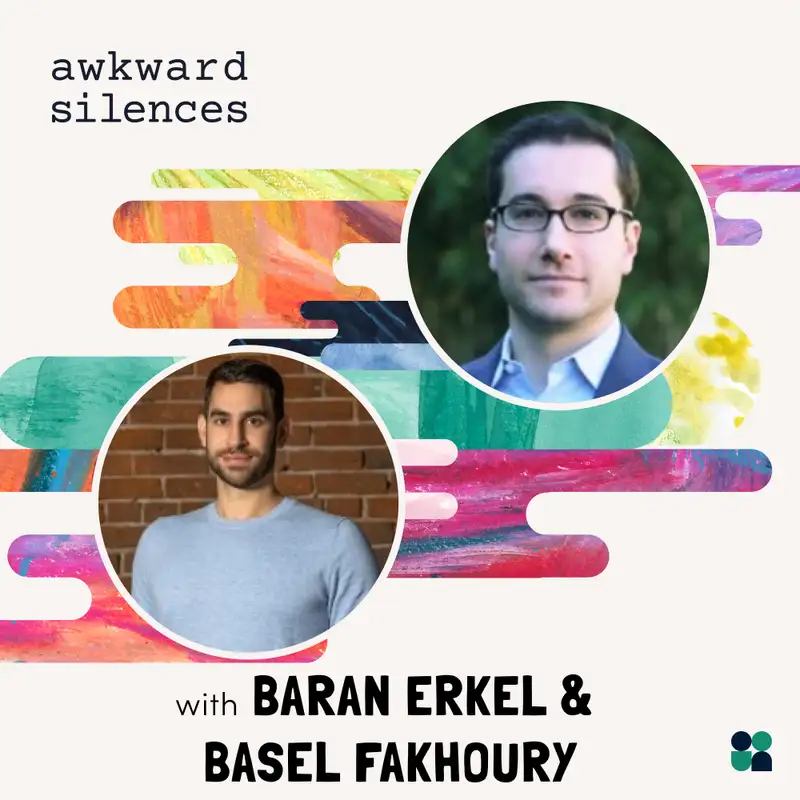
Ben [0:01:31]: My guests are Basek, the co-founder and CEO of User Interviews now part of UserTesting Basek welcome.
Basek [0:01:39]: Thank you.
Basek [0:01:39]: Happy to be here.
Ben [0:01:40]: And Baran, who is the Chief Strategy Officer at UserTesting.
Ben [0:01:43]: Welcome my friend.
Ben [0:01:44]: It's a great pleasure to meet you and take a little bit of your time today.
Baran [0:01:48]: Great to be here, Ben.
Baran [0:01:48]: Thank you.
Ben [0:01:50]: Now, our friends at UserTesting recorded a great conversation with these two.
Ben [0:01:54]: I've had to apply them with bonus bucks, Pecan bucks, all sorts of rewards and favors to get a little bit of their time.
Ben [0:02:01]: Our goal today is to be talking about high level industry level insights.
Ben [0:02:05]: So if you're someone who thinks about market or consumer insights or maybe you're a product leader or maybe you're someone who thinks about strategy a lot.
Ben [0:02:14]: You likely use customer feedback and customer data and customer intelligence to make those decisions.
Ben [0:02:19]: This conversation will be of interest to you.
Ben [0:02:22]: We're gonna be talking not just about the tech stack, but we're gonna be talking about these various flows of data.
Ben [0:02:27]: How data get collected, aggregated organized and certainly made sense of because These two guys spend a lot of time thinking about it, not granular, which we often do on this podcast talking about the practice of doing research.
Ben [0:02:39]: These guys think about how that research rolls up how it can be useful to organizations and How it can unlock new opportunity.
Ben [0:02:46]: So guys, I was wondering if we could start a sort of a very quick state of union.
Ben [0:02:52]: Ba, I'm wondering if you could go first.
Ben [0:02:54]: You've been certainly thinking about the recruitment layer of research.
Ben [0:02:57]: You've been thinking about customer intelligence and insights generally.
Ben [0:03:00]: Give me a one to three sentence state of.
Ben [0:03:04]: What are leaders thinking about Vis vis research, what research leaders themselves or practitioners thinking about, give us a sense of your sense of the industry today.
Basek [0:03:13]: Yeah.
Basek [0:03:13]: Definitely.
Basek [0:03:13]: I think there's a lot of change in the industry, which leads to sometimes challenges as well as a lot of opportunity.
Basek [0:03:20]: I think, obviously, the number one topic for the past two years now has been Ai.
Basek [0:03:25]: Alright?
Basek [0:03:26]: So how does Ai affect different parts of research practitioners day to day job, but I think more interesting at maybe a higher level and, you know, UserTesting and I talk about this often is that with Ai as it changes behaviors of users a lot.
Basek [0:03:42]: I think therefore it, the value of customer insights becomes bigger.
Basek [0:03:46]: Right?
Basek [0:03:46]: When things aren't changing as much, Don't need as often fresh new insights because, you know, the research you did previously kinda still holds whereas with huge kinda dislocations, the need for understanding your customers increases.
Basek [0:04:01]: So I think I think there's is definitely a increase in the need of insights.
Basek [0:04:04]: But at the same time, I do think there is more pressure on budgets then there has historically been so this is obviously putting pressure on the the research team.
Basek [0:04:12]: So State of Union, once again, a lot of a need for insights.
Basek [0:04:15]: I think different companies are understanding that need more and the winners in my opinion will be the ones that invest more in it.
Basek [0:04:22]: But also kind of pressure on the budgets overall across a lot of teams.
Ben [0:04:27]: Yeah.
Ben [0:04:27]: And On, you all...
Ben [0:04:28]: You sit in and currently and have sit on, strategies and corporate and development roles, you think very long term, not the Basek doesn't, but you're horizon three thinker.
Ben [0:04:38]: You have to peak around the corner so that you can steer the corporate and business ship where it ought to be going.
Ben [0:04:45]: It feels like this moment with artificial intelligence really means that folks wanna pull.
Ben [0:04:50]: I'm gonna really lean into this maritime metaphor.
Ben [0:04:52]: Let's see if I can it.
Ben [0:04:53]: Really wanna go like full steam ahead into artificial intelligence and synthesis of insights quickly.
Ben [0:04:59]: But I imagine for a strategy person like you, you probably think, like, wait wait a second.
Ben [0:05:03]: I need to make sure I I'm looking before I leap.
Ben [0:05:05]: So historically, both at your time at UserTesting and at previous roles, how did research feed into or influence what it is that you and your teams did?
Baran [0:05:15]: Yeah.
Baran [0:05:15]: Ben.
Baran [0:05:15]: At, you know, one consistent thing from the past to now in the future, I think is successful companies or customer centric companies.
Baran [0:05:24]: And and all the companies I've worked at, the ones that have been the most successful and the most fun to work at have just had that in the Dna.
Baran [0:05:31]: Yeah.
Baran [0:05:32]: And sometimes we've had to reinforce that, maybe coming in as a new leader Sure.
Baran [0:05:37]: That is a consistent thing that will not change amidst all this change.
Baran [0:05:41]: In that, I think insights that are really backed by data and quality insights backed by quality data, are things that, you know, people like me and, you know, working with the Ceos I've worked with, are super helpful and are...
Baran [0:05:58]: I would say necessary as we're making, like, the high stakes long term decisions, like you said, I mean, we you know, we work on the near term, but we think about the long term and need to have an idea of where we're going in three or so years.
Baran [0:06:11]: It's kinda in technology You can't think too much farther than that.
Baran [0:06:13]: Sure.
Ben [0:06:14]: Yeah.
Ben [0:06:14]: Good point.
Baran [0:06:15]: And, I mean, you know, we shouldn't be making tons of decisions we should be making a few high stakes decisions, and those, you know, we should have a lot of confidence behind.
Baran [0:06:23]: So the more data the more customer insights we can have behind those, the better.
Baran [0:06:28]: And I think this moment best talked about the Ai kind era that we're in, it's even more uncertain, you know, even the next six months.
Baran [0:06:36]: And so it's even more critical.
Baran [0:06:38]: I think the practice that we're all in around customer insights.
Ben [0:06:41]: And so when as someone who hasn't had the privilege because nothing would get done.
Ben [0:06:45]: It to be in the meetings about setting strategy I'm the cartoon character of the sort joke or they bring in to tell some jokes.
Ben [0:06:50]: How do, And this is a question for both of you.
Ben [0:06:52]: How do executives think about balancing that risk versus reward.
Ben [0:06:57]: You know, that first mover advantage?
Ben [0:06:59]: You wanna innovate broadly defined, but you also wanna be careful with one's resources, whether that's talent or technology.
Ben [0:07:05]: So Basek I'll throw it over to you.
Ben [0:07:07]: How have you?
Ben [0:07:08]: And for example, your cofounder, Dennis and Bob think about that dialect between, like, hey, We have a hunch about this space, and we wanna be very careful about you know, our resources is broadly defined.
Ben [0:07:19]: How do you think about?
Ben [0:07:19]: What's your sort of framework for thinking about those sorts of moments?
Basek [0:07:24]: Yeah.
Basek [0:07:24]: No, it's a really good question.
Basek [0:07:25]: I wanna say we've been super consistent always, but I think the way I like to think about it is you never necessarily need to.
Basek [0:07:34]: Or we have historically never felt like we need to dive right in.
Basek [0:07:38]: Right away.
Basek [0:07:38]: Right?
Basek [0:07:38]: There's iterative steps you can do.
Basek [0:07:40]: Right.
Basek [0:07:40]: There are experiments.
Basek [0:07:41]: There are goals.
Basek [0:07:42]: There's research be doing sure across and And I think it should be an iterative process that compounds over time and as you kind of learn more, have more success, then you can allocate more and more resources to it.
Basek [0:07:55]: So I think generally, a lot of things kind of you know, strategic decisions we've made have started with a a small team doing an Mvp or testing it out after doing research.
Basek [0:08:06]: And then based off the success or lack of success on that.
Basek [0:08:10]: We determine pay what's the next step.
Basek [0:08:12]: So that's kinda how we tend to balance it.
Basek [0:08:14]: Always driven by customer insights what we're hearing from customers, but then doing it in a very iterative process.
Basek [0:08:19]: Be, how about for you?
Ben [0:08:21]: How have you handled that poll in either direction of innovate but consolidate.
Baran [0:08:26]: It really depends on the culture around decision making the leadership in the organization, You know, the best ones, I think really have a test and learn culture.
Baran [0:08:36]: Okay.
Baran [0:08:37]: They're rapid learning machines, and that goes for startups, which is that's our requirement for a startup up.
Baran [0:08:43]: You gotta learn and and iterate integrate and find product market fit or else you don't succeed.
Baran [0:08:47]: Yeah.
Baran [0:08:48]: Something Basek and team did really well with these interviews obviously.
Baran [0:08:51]: But also for larger companies, you're making bigger bets, you're making, you know, large resource allocation decisions.
Baran [0:08:58]: If you have the culture of testing and learning.
Baran [0:09:00]: And I would say what we do with consumer insights is an example, a manifestation of that kind of culture of getting data, getting feedback, getting input to then make decisions, try things out and then continuing that iterative loop.
Baran [0:09:15]: If you have that...
Baran [0:09:16]: You you just make smarter decisions, you are often right more than you are wrong.
Baran [0:09:21]: And the...
Baran [0:09:23]: If you don't have that culture, you know, there are other ways.
Baran [0:09:25]: There are, hey, the Ceo or some leader's got.
Baran [0:09:29]: Right?
Baran [0:09:29]: And, I mean, gut can be right.
Baran [0:09:31]: And as you sure experience.
Baran [0:09:33]: It's actually Sure.
Baran [0:09:34]: It's wise to listen to it.
Baran [0:09:35]: But you don't want that to be the exclusive kind of decision making culture.
Baran [0:09:39]: And so the balance there is really important.
Baran [0:09:42]: I've always tried to talk with my teams and organizations around building that learning culture so that we're making the best informed decision we can, because ultimately, the rate of decision making is important and then the rate of correct decisions is also important.
Ben [0:10:00]: I'm so grateful that each of you said that test and learn, iterative sort of rolling approach because I think too often I'm gonna use just insights folks, you know, if you're a researcher or a product person, you know who you are out there.
Ben [0:10:12]: If you're doing something where you're collecting data to try to make a decision.
Ben [0:10:15]: I think and I fault pray to this.
Ben [0:10:16]: Too often we think I need to deliver the thing, and then they're either gonna do the thing or not do the thing.
Ben [0:10:21]: This bim modal toggle.
Ben [0:10:23]: But I love that each of you were describing it as a dial.
Ben [0:10:25]: We're gonna turn it up to two to see, you know, Vessel, for example, we have been playing with a lot of artificial intelligence in helping our customers find the right participants for their projects.
Ben [0:10:35]: Now we didn't just shove a bunch of Ai in front of them without doing, you know, thoughtful consideration about how that might disrupt or make better their workflows.
Ben [0:10:43]: We did incremental tested and then reflected.
Ben [0:10:45]: And Ron, it sounds like even at the more executive c suite level that can happen.
Ben [0:10:50]: And so I I wanna encourage our listeners to remember that tiger teams are valuable.
Ben [0:10:54]: User Interviews, and UserTesting makes great use of them.
Ben [0:10:56]: Get together to the smart folks who are curious about the thing, see what's possible.
Ben [0:11:00]: You don't need to deploy all of the budget for a quarter or year, take a little bit.
Ben [0:11:04]: Make the case.
Ben [0:11:05]: I think this is a nice reminder for researchers and insights folks to, you know, be curious.
Ben [0:11:09]: And these two executives are themselves curious.
Ben [0:11:12]: I'm wondering if we could things.
Ben [0:11:13]: Please.
Ben [0:11:14]: Go ahead.
Ben [0:11:15]: Yeah.
Ben [0:11:15]: I think
Basek [0:11:16]: moving fast and executing fast is incredibly important.
Basek [0:11:19]: Maybe the most important thing first started to be successful.
Basek [0:11:21]: That is different than being the first mover.
Basek [0:11:24]: I don't I being the first mover is a little bit overrated.
Basek [0:11:27]: Like, I don't think he necessarily say a little more.
Basek [0:11:29]: I think you should be continuously moving fast continuously building continuously staying and iterating and executing on a vision relentlessly, but that doesn't mean that, like, if there's this new shiny product or market to move into that being the first one to have a full suite in that product or even a full product in that market is gonna determine who's the winner or not.
Basek [0:11:53]: Right But I think it's much more important to have this kinda culture of moving quickly.
Basek [0:11:57]: That doesn't mean you need to jump all the way in and be the first person in the market.
Basek [0:12:01]: I like, you, historically, a lot of time.
Basek [0:12:03]: Second, third, fourth movers or are the winners of markets.
Basek [0:12:05]: We see this all the time.
Basek [0:12:07]: So I think, to your point, like, there are a lot of trade offs.
Basek [0:12:10]: Right?
Basek [0:12:10]: You can be moving fast against other things.
Basek [0:12:12]: So when you choose to go move fully into a new thing.
Basek [0:12:15]: You are moving slower and the other things.
Basek [0:12:17]: That's why they're not necessarily one to one there.
Ben [0:12:21]: I wanna say, and Brian, I a question about how you you mentioned decision culture a few times.
Ben [0:12:25]: I wanna revisit that idea.
Ben [0:12:27]: One of the things that best, I really appreciate it and have appreciate it during my time at User Interviews is your pension for reminding us why we're here.
Ben [0:12:35]: You regularly remind us what the mission is, what we're doing.
Ben [0:12:38]: You call it kind of score board metrics, you start every single all hands with.
Ben [0:12:42]: Here's what we're doing and here's how we're doing against it.
Ben [0:12:44]: I, as someone who's on the sort of go to market team, I have always appreciated that.
Ben [0:12:48]: Even though I know it, I just like to be told it.
Ben [0:12:51]: And so I think that it helps filter and render intel, a lot of the things, the bets what we might be making.
Ben [0:12:56]: You've mentioned our decision culture.
Ben [0:12:58]: I imagine when you're dropped in or you are integrated into a, a leadership team or you're brought on board to maybe a new or or department, you know, there's an existing culture there.
Ben [0:13:07]: And I expect that with technology, artificial intelligence among it, the tech will get easier and easier and faster and faster to build.
Ben [0:13:15]: And we're still people building stuff for other people.
Baran [0:13:19]: Yep.
Ben [0:13:19]: And I think culture makes the difference?
Ben [0:13:21]: It can help us fore shadow authenticity it can help us create great connections with customers and it can help us learn.
Ben [0:13:27]: So a very long way of asking, how do you and your team think about that decision culture.
Ben [0:13:32]: What are some of the things that you have found successful to help either build openness, build curiosity, build honesty.
Ben [0:13:38]: The things that I think you have said before make for a successful business?
Ben [0:13:42]: How do you stoke that?
Ben [0:13:42]: How do you make that possible?
Baran [0:13:44]: You know, culture, the same culture kinda starts at the top, and you talked about, you know, how that some of the ways he helps shape the culture, User Interviews very successfully.
Baran [0:13:52]: And I think a lot of it is the actions of leaders, you know, things like a sense of urgency.
Baran [0:13:59]: That drives then a sense of fast decision making, and then that kind of filters down to all the things you need to do to make the decision.
Baran [0:14:07]: Whether it is user experience research or some data analysis or whatever it is.
Baran [0:14:12]: So just bringing a sense of urgency, I, wholeheartedly agree with a Basek said, like, speed of decision.
Baran [0:14:19]: They can probably the number one determining factor and success.
Baran [0:14:22]: There's actually studies around that, and you can read from high paid consulting firms.
Baran [0:14:26]: But that's one.
Baran [0:14:27]: I I think sense of urgency.
Baran [0:14:28]: And then two, the questions, you know, that you ask in those meetings, whether it's leaders or anyone in the meeting around, Well, you know, how do we know, why do we believe that that might be true, you know, a direction that somebody proposing that we go.
Baran [0:14:41]: And, you know, the rigor that you kind of ask for but balancing that with speed.
Baran [0:14:48]: So there's, like, natural tension.
Baran [0:14:50]: You know, You could say well, Wanna move fast, but you wanna have evidence, You wanna have insights.
Baran [0:14:54]: Know, if I have more time, you know, I'll get more evidence more data.
Baran [0:14:57]: So it's a natural tension.
Baran [0:14:59]: A healthy tension.
Baran [0:15:00]: And that's part of leadership and being thoughtful about that culture of how you manage both of those it's ultimately good outcomes.
Ben [0:15:08]: That's anything to add there?
Basek [0:15:10]: No.
Basek [0:15:10]: Whole totally agree.
Basek [0:15:11]: I think one thing that, you know, I'd like now that user interview is part of UserTesting and seen a lot similarities in the cultures.
Basek [0:15:16]: You talked about how I will start the all hands with, you know, what we're doing and how we're doing against them.
Basek [0:15:21]: And, you know, I think UserTesting makes these one pager on hey here are the values.
Basek [0:15:26]: This is the strategy.
Basek [0:15:26]: This is what we're trying to do.
Basek [0:15:28]: And I think, you know, Eric the Ceo, and Brian talked about lam them and, like, sending them out.
Basek [0:15:32]: Right.
Basek [0:15:32]: So it's always just kind of like.
Basek [0:15:34]: In front of your face at all times, because even if you can recall on your own if someone asks you it's different about it being there.
Basek [0:15:41]: So...
Ben [0:15:41]: Yeah.
Ben [0:15:41]: Appreciate just this week Eric said that they have.
Ben [0:15:44]: Fewer than, like, I think there are three forgive me.
Ben [0:15:47]: I'm already failing the quiz, but that they choose fewer of them so that they can be memorable.
Ben [0:15:51]: Eric said, they're not gonna help if there's fifty.
Ben [0:15:53]: He won't remember them.
Ben [0:15:55]: He won't be able to advocate for them and won't be able to surface them both in executive leadership meetings or in meetings with cross functional stakeholders.
Ben [0:16:02]: So, yeah, I I too have appreciated the clarity of those values.
Ben [0:16:06]: And I think that is probably something that founders need to keep in mind.
Ben [0:16:10]: We can get obsessed with rightfully, so the tech what we're building even rightfully the customer, but I think the rationale for it, that can feed so much into what you're doing the marketing, the message that you're trying to share, certainly your road roadmap, what you're building and then the ways in which you do it.
Ben [0:16:26]: That ought to come from, and I've had the pleasure of working with some great founders.
Ben [0:16:30]: They usually have that fire, that thing that's really driving them, whether it's to solve a specific problem or to do so in a particular way.
Ben [0:16:37]: So I come in each of you and your org on that.
Ben [0:16:40]: Because for me as a as an I see it's motivating.
Ben [0:16:41]: I would be remiss to not ask Coke.
Ben [0:16:43]: Please.
Baran [0:16:44]: Ben, I I I wanna jump in there.
Ben [0:16:46]: Please
Baran [0:16:47]: just around clarity and simplicity, you know, we're talking about, Yeah.
Baran [0:16:51]: Clarity and simplicity and kind of sharing company strategy and culture.
Baran [0:16:55]: But I think it's super relevant for, like, our community, our audience in user experience research.
Baran [0:17:01]: You know, ultimately, we are trying to influence decisions and trying to bring customer insights into decision making into the room.
Baran [0:17:10]: Right?
Baran [0:17:11]: I think one kind of key thing for folks because you were asking about, you know, how do leaders make decisions is clarity and simplicity are key, especially Mh.
Baran [0:17:21]: When you're talking to executives, You know, the attention span of executives is short and getting shorter as we're all dealing with, like, the pace of change and and yeah.
Baran [0:17:30]: All this Ai stuff.
Baran [0:17:31]: The bottom line front bluff kind of methodology, like, that's so important to have the key point, the key message, be really clear really upfront, and then it can be supported with all the information, all the amazing kind of supporting work and research that's been done.
Baran [0:17:48]: But, like, so what is so important because we have limited capacities, all of us as humans to absorb information to remember it to act on it.
Baran [0:17:55]: And that's why we do it at users testing, like, the one pager strategy on a slot.
Baran [0:17:59]: Very simple three core value.
Baran [0:18:00]: It's very simple.
Baran [0:18:01]: We wanted it to be memorable and actionable.
Baran [0:18:03]: And so I would say the same thing for all of our community members is remember that because ultimately, all the greatest research in the world isn't gonna make a difference if it's not gonna be acted on.
Ben [0:18:14]: Yeah.
Ben [0:18:14]: And that was gonna be my question to you is each of you has been in high stakes meetings or you make lots of decisions each day each week and so much of what I spend my time thinking about is how I can, educate train up level insights professionals to inform those decisions more effectively.
Ben [0:18:31]: And I think brought to your point, we can sometimes get bogged down with Like, okay.
Ben [0:18:35]: Just pick one number or pick the very best quote or get the video, But I like what you're saying that it's, like, what do you want them to take away.
Ben [0:18:41]: What is the so from all the excellent work you've done?
Ben [0:18:44]: Whether it was multi network focus groups or a whole host of quantitative studies that you've compiled into something.
Ben [0:18:51]: What is it that you want this person, an executive in this case to take away.
Ben [0:18:55]: But for you, I mean, you've set attention span shorter.
Ben [0:18:58]: You know, is there a kind of data that you like I guess, What do you like to see when you're being delivered insights or a report a deliverable?
Ben [0:19:05]: What helps you make that decision?
Baran [0:19:07]: That is a great question.
Baran [0:19:08]: So one the structure, so that's what I was kinda talking about before.
Baran [0:19:11]: Very simply, Folks can look it up online.
Baran [0:19:13]: If I'm not familiar, but there's a pyramid kind of principle around storytelling or around presenting in a business context, and you can have a, you know, pyramid the way we think about it or you can have it upside down.
Baran [0:19:23]: And the two different approaches are you start with the headline, the key message, and then you have supporting data points after it.
Baran [0:19:30]: Or it could be the other way.
Baran [0:19:31]: Hey, There's data point a, data point b.
Baran [0:19:33]: We've learned c.
Baran [0:19:34]: We've learned d.
Baran [0:19:35]: Therefore, we should do this.
Baran [0:19:39]: The first is more effective with executive start with we should do this.
Baran [0:19:43]: And then if you have questions, I can tell you about Abc b c and d and show you what we've learned.
Baran [0:19:48]: I would say that that structure is the most important thing, so you don't lose the room, lose the executive.
Baran [0:19:54]: And then I would say really relevant grounded research and insights that's honestly a mix of qualitative and quantitative.
Baran [0:20:02]: I've seen be very very effective.
Baran [0:20:04]: You have to think about the audience, and everyone's different, and we process things differently.
Baran [0:20:09]: Some people tend to be very quantitative processors and thinkers and some you know, more qualitative and just, like, a single video will, like, you know, really sway that person differently than someone else.
Baran [0:20:20]: So you wanna think about the audience and there's probably a mix of thinkers there.
Baran [0:20:24]: And so a complimentary kind of blend is I've seen to be quite effective.
Baran [0:20:29]: And then just again, being humans and where we...
Baran [0:20:33]: You know, where humans and faces and voices resonate so strongly, like actual video proof, some research clips that I've seen in rooms be so effective.
Baran [0:20:44]: Is powerful.
Baran [0:20:46]: I can't be the only thing?
Ben [0:20:47]: Sure.
Baran [0:20:48]: But it can really, you know, be a powerful supporting data point.
Baran [0:20:51]: Hassle?
Basek [0:20:53]: Yeah.
Basek [0:20:53]: I'd totally agree with with all of that.
Basek [0:20:54]: I would say the one thing at least personally that is also hopeful to me is sometimes you get a great insight, but you're not sure what to do with it.
Basek [0:21:03]: So when that is paired with, hey, here are some suggested action items for, you, I think marketing should do this?
Basek [0:21:10]: Or, hey, can we fit this into the road or as we're thinking through pricing, we should do that?
Basek [0:21:14]: I think kinda tying the insight to more specific action because sometimes, you know, as an executive.
Basek [0:21:19]: In some ways, you have a lot of influence.
Basek [0:21:21]: We you're not actually doing a lot of the day to day stuff so showing how does this trickle down, I think it's useful as opposed to a very useful insight or a very important insight, but you're not quite sure how to action on it or what?
Ben [0:21:34]: Yeah.
Ben [0:21:34]: In addition to all the various things I've been writing and seeing and researching about how we can...
Ben [0:21:39]: As researchers better use whatever tools available, the other biggest piece of or most frequently delivered piece of advice that I give is, know your context.
Ben [0:21:48]: Know your stakeholders know your business, know your industry, and so both broad.
Ben [0:21:51]: You're hinting at that, how might marketing use what it is you're going to recommend.
Ben [0:21:56]: Is what you're going to share to your chief strategy officer even really doable?
Ben [0:21:59]: Have you asked yourself the extent to which there's a feasibility component.
Ben [0:22:03]: Do you know the room?
Ben [0:22:04]: Do you know your audience?
Ben [0:22:05]: And so I appreciate that each of you are selfish officially saying things that, you know, we are hearing in the market that researchers have a great set of tools it's not devoid of the context in which you were.
Ben [0:22:14]: Even if you're working at an agency and you're supporting customers and clients that way, or if you're in house and you're sort of embedded in this sense of an an organization.
Ben [0:22:21]: You should know that.
Ben [0:22:22]: And I think it speaks to what each of you said earlier that clarity the reminder of the values.
Ben [0:22:26]: The reason I expect that an executive does that is that that'll trickle down to the ics and throughout the organizations broadly, so they know what we're working on and why.
Ben [0:22:34]: That's why Okay ours are so popular.
Ben [0:22:35]: It helps us at the Ic level know what it is that we're working on and why it's valuable.
Baran [0:22:40]: Well said, Bev.
Ben [0:22:41]: Yes.
Ben [0:22:41]: Trying to do my best.
Ben [0:22:43]: Basek.
Ben [0:22:43]: I wanna turn to you because there are often builders of companies who listen to awkward silence.
Ben [0:22:48]: There are lots of companies being built, which is excellent for the market.
Ben [0:22:51]: We have lots of competition, lots of new ideas Advice for a founder in twenty twenty six, something that maybe you and your founders wish Shu knew when you started either Ui or mobile suites?
Ben [0:23:01]: Certainly, I'll drop our founding story where we have the great anecdote about doing research and how it would have helped sooner.
Ben [0:23:08]: What other advice would you give to a founder today who's got a burning idea and an interest to make something of it.
Basek [0:23:14]: Yeah.
Basek [0:23:14]: Kind of, you know, reflecting what Barran said earlier, you know, matters at the founder level, which is...
Basek [0:23:18]: I think matters even more when you have no brand, no lock in is I think just ob obsessed about the customers.
Basek [0:23:24]: Right just do non scalable things and just really, really focus on making the customers happy.
Basek [0:23:30]: And and what I will kind of pull on that thread is, I think that's easier to do when you have a focused customer base so you have a I often recommend to founders, like, you know, cut down your initial market to as narrow and niche as possible because it's hard to break above the noise.
Basek [0:23:46]: Right?
Basek [0:23:46]: Like, if you're solving the fourth most important problem for a thousand people that's less good than solving the first most important problem for ten people.
Basek [0:23:54]: And you can move into other things over time.
Basek [0:23:57]: But when you have no brand, very little product, you really, really need to focus on short pain point and to understand that you have to keep the customers close and to be able to solve that.
Basek [0:24:08]: For enough customers.
Basek [0:24:09]: They need they need to have it the same problem.
Basek [0:24:10]: You can't solve multiple problems for multiple people.
Basek [0:24:13]: So I really focus on narrowing down who you're talking to and, like, get as narrow and niche as possible, and then really solve that, then figure out how you can expand from there.
Ben [0:24:22]: Bar, how about for you?
Ben [0:24:23]: Either something that strategy, officers or teams need to do more or something that you wish you knew when you began your executive career.
Baran [0:24:30]: I think this will be, you know, nothing new to folks, but it's the more experience I get older I get.
Baran [0:24:34]: The more I realize it's maybe the most important thing and that would be work with great people, find the best people that you can, hire the best people that you can, And I think, as a founder, like, at the early stages, it's one of the absolute most important things you can do.
Baran [0:24:51]: You know, as a small team, every individual that comes onboard the team has huge impact on the future.
Baran [0:24:58]: At the culture, at the talent level, the future trajectory of the business.
Baran [0:25:02]: And that's something that Basek, Dennis and Bob clearly did a great job of as Meeting more new team members.
Baran [0:25:09]: So that be my advice.
Erin [0:25:12]: Awkward interruption.
Erin [0:25:12]: This episode of Awkward silence like every episode of Awkward silence is brought to you by User Interviews.
Carol [0:25:19]: We know that finding participants for research is hard.
Carol [0:25:21]: User Interviews is the fastest way to recruit targeted, high quality participants for any kind of research.
Carol [0:25:27]: We're not a testing platform.
Carol [0:25:28]: Instead, we're fully focused on making sure you can get just in time insights for your product development, business strategy, marketing and more.
Erin [0:25:37]: Go to User Interviews dot com slash awkward to get your first three participants free.
Ben [0:25:43]: When we look at the research space and again, broadly defined.
Ben [0:25:46]: But let's focus for a second on research tooling, these systems and platforms and experienced solutions that help practitioners do the stuff we're talking about.
Ben [0:25:55]: Filter and figure out what customer feedback is worth collecting, make some sense of it and then deliver it in a decision driven way.
Ben [0:26:01]: What do you think the landscape will or that's, I'll start with you because you spend a lot of time Not that you don't.
Ben [0:26:07]: But Basek what I've heard you, muse and think about and write about and present about the landscape of tooling broadly defined for getting insights to decision makers.
Ben [0:26:16]: How will that landscape look differently at the end of the year than it does now.
Ben [0:26:20]: And it already has shifted quite a bit.
Ben [0:26:22]: What do you expect will happen by the end of the year?
Ben [0:26:23]: If we were to do this pod on December twenty third, you know, toward the end of the year.
Basek [0:26:28]: I mean, it's all hard to put, you know, Exact.
Basek [0:26:30]: Times on changes.
Basek [0:26:32]: I what are they they they can just cover in a year than you expect, but faster in five years or or something like that.
Basek [0:26:38]: Phrase.
Basek [0:26:38]: Look, I mean, it's the boring answer.
Basek [0:26:41]: But Ai everywhere.
Basek [0:26:43]: Right?
Basek [0:26:43]: I think we're seeing an explosion in Ai moderated tools for dozens of them there.
Basek [0:26:47]: I think, you know, the market's gonna continue to explore this, and I assume that there will be new insights and how they work.
Basek [0:26:55]: Right?
Basek [0:26:56]: Like, right now, they're very much just mirroring a person's.
Basek [0:26:58]: They're their new Let me take a step.
Basek [0:27:01]: Like, when you think about technology, the first thing it usually does is mirror the previous world.
Basek [0:27:05]: Right.
Basek [0:27:05]: So, like, web one point o was taking text which you had physical and putting it online right?
Basek [0:27:09]: And then is what two point o comes out Like, now we can actually have different functionality.
Basek [0:27:13]: We did it just fairly think of.
Basek [0:27:15]: Right.
Basek [0:27:15]: So I think a lot of the Ai stuff and research is in that kinda one point o stage where it's moderators and there's participants let's put Ai on both of them.
Basek [0:27:23]: So if that synthetic users on one side and moderation on the other side.
Basek [0:27:26]: Mh.
Basek [0:27:27]: I don't think we're right at the two point o stage.
Basek [0:27:29]: Yeah.
Basek [0:27:30]: And I expect that by the end of the year, we'll start seeing some more.
Basek [0:27:33]: Oh, this isn't just, like, using Ai to replace more supplement what had previously been happening.
Basek [0:27:39]: This is, like, a new way to do insights or to do research.
Basek [0:27:42]: There.
Basek [0:27:43]: So I I think we'll start seeing some more interesting stuff by the end of the year, not the...
Basek [0:27:47]: What's ready here as isn't an interesting.
Basek [0:27:48]: Yeah.
Ben [0:27:49]: Yeah.
Ben [0:27:49]: And then I...
Basek [0:27:50]: Another thing too is, I think there is gonna be...
Basek [0:27:52]: I've actually been a believer in this for a long time.
Basek [0:27:55]: Although, I would say a tap and slower than I expected, but I do think we're gonna see, like, there's no reason insights for product themes and marketing teams need to be separate.
Basek [0:28:04]: There's no reason like, you know, data needs to be separate from your res q versus quan needs to be separate.
Basek [0:28:09]: I think over time, like, we are trying to have better information to make better decisions for different parts of the business and through different ways.
Basek [0:28:17]: And I think there will continue to be more ways all of those interact with each other.
Basek [0:28:21]: And, you know, I've been saying that for, like, five years.
Basek [0:28:23]: I remember Vi insights team had, like, the analytics team and the research team all in one insights to see but I was like, everyone's gonna do this.
Basek [0:28:30]: Yeah.
Basek [0:28:30]: It hasn't happened, but I still believe that that is the future.
Basek [0:28:33]: I may we'll see more of that this year.
Ben [0:28:34]: I hope so.
Ben [0:28:35]: Bar.
Baran [0:28:36]: Yeah.
Baran [0:28:36]: On that last point, you know, what we see and we worked with lots of large companies.
Baran [0:28:39]: We see they are distinct teams in, you know, market research or consumer insights on one side and, you know, Ux and product research on the other, but they know each other.
Baran [0:28:48]: They may share some best practices, connect from time to time.
Baran [0:28:52]: There is...
Baran [0:28:53]: I think the potential for you to be right now Basek actually helped by Ai.
Baran [0:28:57]: I've heard, you know, some others pos this that, like, what these teams are now finding is they're both looking into all the Ai tools because we all are, and we're all trying to figure out what we can do with this new magic.
Baran [0:29:08]: And they're realizing that they're both looking at similar things or the same kind of tooling.
Baran [0:29:13]: And then that's a kind natural business reason forcing function to maybe work more closely together on that search or consider working more closely together going forward.
Baran [0:29:23]: So I think the jury is still out, but it's an interesting kind of time driven by all the searching that everybody's doing with Ai.
Baran [0:29:30]: You know, on the broader question of, like, the landscape and tool least.
Baran [0:29:33]: I think people are what we hear from customers is, you know, they would like maybe to have less, you know, not ten tools, but right, a, a handful or less.
Baran [0:29:44]: And to be able to really have partners they can work with not just as, like, a tool vendor, but, you know, as a true partner help them also with services or thinking about best practices, especially again because things are changing so fast and vendors and tool providers, you know, just see lots of companies work with lots of companies.
Baran [0:30:01]: And so I do think, you know, there is a desire to be able to do more with fewer fewer tools in the box to the toolbox.
Ben [0:30:10]: Yeah.
Ben [0:30:10]: Just this week, I heard two things which are exe what you're both discussing.
Ben [0:30:14]: I was talking to unnamed a senior researcher at a large media company that was just merged with another media company and this person was describing how there's such an energy about combining the shared knowledge, but that sometimes the systems, the actual systems by which they're doing their work get in the way.
Ben [0:30:30]: So Basek, I think you're right.
Ben [0:30:32]: And As well that Ai can facilitate some of those.
Ben [0:30:35]: This researcher said they kind of have, like, an underground insights sharing system, not that leadership wouldn't want them sharing what they know, but there is yet to be those formal bridges built.
Ben [0:30:45]: So I am very interested to see how democrat broadly defined helps various teams, market teams, innovation teams there's lots of, you know, Cp g companies that have an entire innovation center that doesn't exactly talk to the user experience folks.
Ben [0:30:59]: But for whom that synergy, yes, I said it would be so valuable to the o okay k r, the bottom line.
Ben [0:31:04]: The customers, whatever it is that the mission is.
Ben [0:31:06]: And so I'm I'm eager to see how technology helps smooth some of those roads or make possible some of those connections because you're right around.
Ben [0:31:13]: There's so much energy with researchers on one side, customer innovation folks on the other to share and learn.
Ben [0:31:18]: It makes everyone's job easier.
Ben [0:31:19]: And I think, and that leads me to my last sort of section here with the bulk of you is that each of view has leaders have learned about, and I know we're still midst of the integration between UserTesting and user, but You know, as folks who are executives there, I'm curious what you've learned and what you're eager to bring.
Ben [0:31:34]: And so Basek, I'll start with you, what is User Interviews bringing to UserTesting and what are you learning as an executive through this process of integration and combination?
Basek [0:31:42]: Yeah.
Basek [0:31:42]: So on the first one and B, I think you'll agree.
Basek [0:31:45]: I think number one thing is I do think we are regarded as the best panel in in the world for research.
Basek [0:31:51]: Right.
Basek [0:31:51]: And I think bringing that in is incredibly important or valuable for UserTesting, you know, clients and customers, there's a lot of synergies with that as well.
Basek [0:32:02]: And and then also, you know, we have a lot of the same clients.
Basek [0:32:05]: They've been asking for this, like, deeper integrations.
Basek [0:32:08]: We were looking through the list of people who have requested that and it's a nice list of
Ben [0:32:13]: That's a great signal too.
Ben [0:32:14]: To your point about signals for making a decision.
Ben [0:32:16]: That's a nice signal.
Basek [0:32:17]: Yeah.
Basek [0:32:17]: Exactly.
Basek [0:32:18]: But I've learned a bunch.
Basek [0:32:19]: I mean, like, my career has been a used interviews.
Basek [0:32:22]: Right?
Basek [0:32:22]: And that has started from Bob and Dennis and over time grown to hundred forty people.
Basek [0:32:28]: So the job has definitely changed.
Basek [0:32:30]: The market has definitely changed, but it's all been out one company.
Basek [0:32:33]: So I think, you know, every day, I'm learning a lot on a personal level, like, decision making frameworks, leadership, communication, all all of that.
Basek [0:32:41]: I'm kinda soaking that in being able to see more more experienced leaders there.
Basek [0:32:45]: And then from a company building perspective, it's just great to see the...
Basek [0:32:50]: When you have scale, the resources, you can bring to your customers to your decision making.
Basek [0:32:56]: We talk about strategy and one thing I've noticed is we would have a much more narrow strategy at User Interviews because we can only execute on a couple things.
Basek [0:33:04]: Brian talks about strategy.
Basek [0:33:06]: And it's a lot of the same ideas we have, but it's, like, hey, we're going.
Basek [0:33:09]: Cross multiple ones at the same time.
Basek [0:33:10]: So that's super fun to see that.
Basek [0:33:12]: And then also looking that it can allow for the customers as well.
Basek [0:33:16]: Right?
Basek [0:33:16]: I think even just from a services perspective.
Basek [0:33:18]: Right?
Basek [0:33:19]: Like, theirs I know fifty something user researchers that are their at UserTesting, helping the user customers, the advocacy and partnership at the senior level to help the end users, you know, get that budget and continue to kinda advocate for them.
Basek [0:33:35]: So it's really cool to see kind of how the scale of a vendor can actually then go support the buyer and the end user and really be a champion for them within their work as well.
Ben [0:33:46]: That's gotta be exciting to have that scale, that energy and efficiency.
Ben [0:33:50]: Brian, how about from your side?
Ben [0:33:51]: What is it like?
Ben [0:33:52]: What has it been like working with the Ui as we call ourselves and and what are you eager to roll out to our our shared customers and certainly our new ones?
Baran [0:33:59]: First thing, I've learned is how awesome so many ui are.
Baran [0:34:02]: You know, I got to know Basek pretty well, but not too many more members of the team, and it's just been phenomenal for the last two weeks getting no team members.
Baran [0:34:09]: I think two things to stand out are one, the just the craft towards product and the whole operation and company.
Baran [0:34:18]: Building the the Basek and the team have in terms of product experience, the operations around, the recruit and the marketplace that is a panel that is really complex to operate.
Baran [0:34:32]: Then just how the business has been run.
Baran [0:34:35]: It's just very thoughtful.
Baran [0:34:36]: I think that's the word I'd use, and that's probably a big reason for the team's success.
Baran [0:34:40]: And then, you know, Basek, you talked about scale, what I love seeing is, like, also just the speed, you know, speed you all have in decision making and doing things, making change happen.
Baran [0:34:53]: Like, I already see it in discussions and on Slack.
Baran [0:34:56]: We talk about something.
Baran [0:34:57]: Like, got.
Baran [0:34:58]: We're gonna do it now and or Bob will, like, update the products very quickly.
Baran [0:35:03]: Bob the Cto.
Baran [0:35:04]: And I love that.
Baran [0:35:05]: I mean, I think we work pretty fast and UserTesting, but naturally, as you grow as an organization gets bigger and you have more people.
Baran [0:35:11]: It's hard to keep up that pace, and so it's wonderful to get this just like infusion of energy and speed back, you know, into the organization that, you know, I think is gonna be great for customers and team members.
Ben [0:35:24]: Yeah.
Ben [0:35:24]: I have been at, a few off sites where a Bob and some of our tech team.
Ben [0:35:28]: Hear a thing and, you know, maybe our customer success team will be reading out something and by the way like, okay.
Ben [0:35:33]: Well, let's go ahead and fix that.
Ben [0:35:34]: And I can see Client, and We have maybe Jeff Shout out to Jeff one of our architects working on that.
Ben [0:35:38]: It is great.
Ben [0:35:39]: And I I will say as someone who's been a customer of both User Interviews and UserTesting.
Ben [0:35:43]: I've always appreciated the human element.
Ben [0:35:44]: I mean shouts in nab bill and the operations team at User Interviews.
Ben [0:35:48]: There are lots and lots of really great human hours to try to make that matching successful.
Ben [0:35:52]: Yes.
Ben [0:35:53]: We have excellent automated intelligence technology and lots of great tech structures to make that stuff automated, and there are humans they're reviewing.
Ben [0:36:01]: And similarly, UserTesting.
Ben [0:36:02]: I know Leanne, and there's a great managed services team There's a wonderful group of experts there to help.
Ben [0:36:06]: Teams that maybe have.
Ben [0:36:07]: I don't wanna say maturity, but our looking to up level their research sa.
Ben [0:36:11]: And so it's the technology of UserTesting, but it is also the people to help you.
Ben [0:36:15]: So I think that's a nice combination.
Ben [0:36:17]: You know, is any good interviewer or I need to ask?
Ben [0:36:19]: What did I not ask that you wanna make sure we get to.
Ben [0:36:21]: We've got a couple of minutes left I don't often get two executives in my sandwich here.
Ben [0:36:25]: Basek luck start with you.
Ben [0:36:27]: What, you've been, you know, doing a lot of discussions doing a lot of thinking.
Ben [0:36:30]: Is there something that you wanna make sure you share and that folks hear from you.
Basek [0:36:33]: So we're we're not talking about the acquisition right.
Basek [0:36:35]: We're talking about the
Ben [0:36:36]: Anything you want.
Ben [0:36:36]: It can be something you're eager about something I didn't ask that you wish I did, something that's...
Ben [0:36:40]: Yeah.
Ben [0:36:40]: You know, missed in all these discussions about research and insights and automation.
Basek [0:36:45]: I'll just say the one thing, I think with the acquisition is I think there's been a lot of questions about what does that mean for the User Interviews product and know I think the one thing just that we've been reiterating from the whole process from when we first talked is this is very number one thing is being customer centric and, you know, part of that means allowing meeting people where they are.
Basek [0:37:04]: So definitely, people can still buy User Interviews.
Basek [0:37:07]: Directly and, you know, use those participants or research hub, however, they think makes sense, and we'll obviously be investing and making the integration with UserTesting as amazing as possible so that people choose to do that over time.
Basek [0:37:21]: But everyone will always have the flexibility to use your interviews directly.
Ben [0:37:25]: Great.
Ben [0:37:25]: How about for you?
Baran [0:37:27]: I would say, thinking about kind of the current moment we're in and this age of Ai that we are in and and, you know, executives on down to everyone in an organization is thinking about.
Baran [0:37:39]: We...
Baran [0:37:39]: I think as a research community, whether you're in a team and an organization, whether you work for a software company, Like, we do, whether you're an agency, we have, I think a great opportunity, and we have an important role to play in this moment where the future of products, the future of the nature of products and experiences is being decided and we'll be decided in the coming years and quarters with Ai.
Baran [0:38:08]: You know, fundamentally, things are gonna change and are changing.
Baran [0:38:12]: And customer insights understanding what people really want how they think about new experiences is so fundamental.
Baran [0:38:19]: And I think we need to make that be known.
Baran [0:38:22]: We think about that lot?
Baran [0:38:23]: How can we help our customers be faster and move faster.
Baran [0:38:26]: And ultimately, I hope that enables user experience researchers and folks in the community to be able to provide faster more relevant insights and really shape their cultures inside their organizations to really keep the customer at the center of all these hugely important decisions that are gonna be made over the next year, two three years as we're figuring out the future.
Baran [0:38:47]: Wonderful.
Ben [0:38:48]: I will volunteer now on record to be the volume booster if needed.
Ben [0:38:52]: You can always tag me in bosses.
Ben [0:38:53]: Awesome needs some more volume.
Ben [0:38:54]: Basek.
Ben [0:38:55]: Thank you so much.
Ben [0:38:56]: Your time is valuable, and I'd really enjoy learning a time I've been taking notes as the viewers can probably see.
Ben [0:39:01]: Next time, we will talk Acc basketball.
Ben [0:39:03]: We've got Wolf pack and devil's on the call.
Ben [0:39:05]: I'm looking at the live standings, Duke is undefeated in the league, but it's early.
Ben [0:39:10]: And the Wolf pack are foreign too.
Ben [0:39:12]: So we will check back in.
Ben [0:39:13]: I will may have to have even these fellas further apart from one another way.
Ben [0:39:16]: Bronze Basek.
Ben [0:39:17]: Congratulations.
Ben [0:39:18]: I'm so excited to be a teeny tiny part of this, and I'm looking forward to making this a success.
Ben [0:39:22]: For all of our teams and all of our customers.
Ben [0:39:24]: Thanks Fellas.
Baran [0:39:25]: Man.
Baran [0:39:25]: Thanks so much.
Ben [0:39:27]: This is
Baran [0:39:27]: a lot of fun.
Basek [0:39:27]: Thanks guys.
Basek [0:39:27]: And this go lot fun.
Basek [0:39:28]: Of course.
Erin [0:39:36]: Thanks for listening to awkward silence brought to you by User Interviews.
Erin [0:39:39]: Theme music by fragile gang.
Ben [0:39:52]: Hey hi
Erin [0:39:52]: there, Awkward Silences is listener.
Erin [0:39:53]: Thanks for listening.
Erin [0:39:54]: If you like what you heard, we always appreciate a rating or review on your podcast app of choice.
Carol [0:40:00]: We'd also love to hear from you with Feedback.
Carol [0:40:02]: Guest topics or ideas so that we can improve your podcast experience.
Carol [0:40:06]: We're running a quick survey so you can share your thoughts on what you like about the show, which episodes you like best?
Carol [0:40:11]: Which subjects you like to hear more about, which stuff you're sick of and more just about you?
Carol [0:40:16]: The fans have kept us on the air for the past five years.
Erin [0:40:19]: We know surveys usually suck.
Erin [0:40:21]: See episode twenty one with Erica alcohol for more on that.
Erin [0:40:24]: But this one's quick and useful fully promise.
Erin [0:40:26]: Thanks for helping us make this the best podcast it can be.
Erin [0:40:30]: You can find the survey link in the episode description of any episode or head on over to User Interviews dot com slash awkward survey.
Creators and Guests